
Regulation of International Financial Markets and Banking
The research group "Regulation of International Financial Markets and Banking" analyzes international capital flows and the effects of regulatory changes on financial stability. Financial integration promotes efficient capital allocation and risk sharing but also eases the transmission of shocks across borders.
Banking regulation has accordingly evolved in recent years, yet the full impact of these reforms remains unclear. Hence, the group focuses on two areas:
First, it investigates the drivers of international capital flows and their effects on financial stability. Periods of high financial integration often precede crises with lasting real-economy consequences. The aim is to understand how to ensure stable and effective credit allocation.
Second, it examines how changes in regulation and supervision influence cross-border banking, especially within the context of European integration. This includes evaluating the balance between regulatory harmonization and unintended market distortions.
Two data projects support this research: the International Banking Library, a web-based platform for research exchange with a quarterly newsletter reaching more than 700 subscribers, and the Financial Markets Directives Database, which documents the implementation of key EU financial regulations with a special focus on the European Banking Union. Together, they promote evidence-based policymaking and enhance the group's global visibility.
Research Cluster
Economic Dynamics and StabilityYour contact

- Department Financial Markets









EXTERNAL FUNDING
04.2025 ‐ 03.2030
The Role of Multinational Enterprises in the Global Financial Cycle (Programme for Women Professors)
Leibniz Association
10.2021 ‐ 06.2025
Distributional Effects of Macroeconomic Policies in Europe (DEMAP)
Leibniz Association
The project examines how political measures at the level of the European Union, for example the European Recovery Fund, affect inequality between households.
02.2021 ‐ 01.2023
Banks as Intermediaries of State Subsidies to the Real Sector: Implications for Financial Market Stability and Allocative Efficiency
Deutsche Bundesbank
07.2017 ‐ 12.2022
The Political Economy of the European Banking Union
Causes of national differences in the implementation of the Banking Union and the resulting impact on financial stability.
01.2015 ‐ 12.2017
Dynamic Interactions between Banks and the Real Economy
Publications
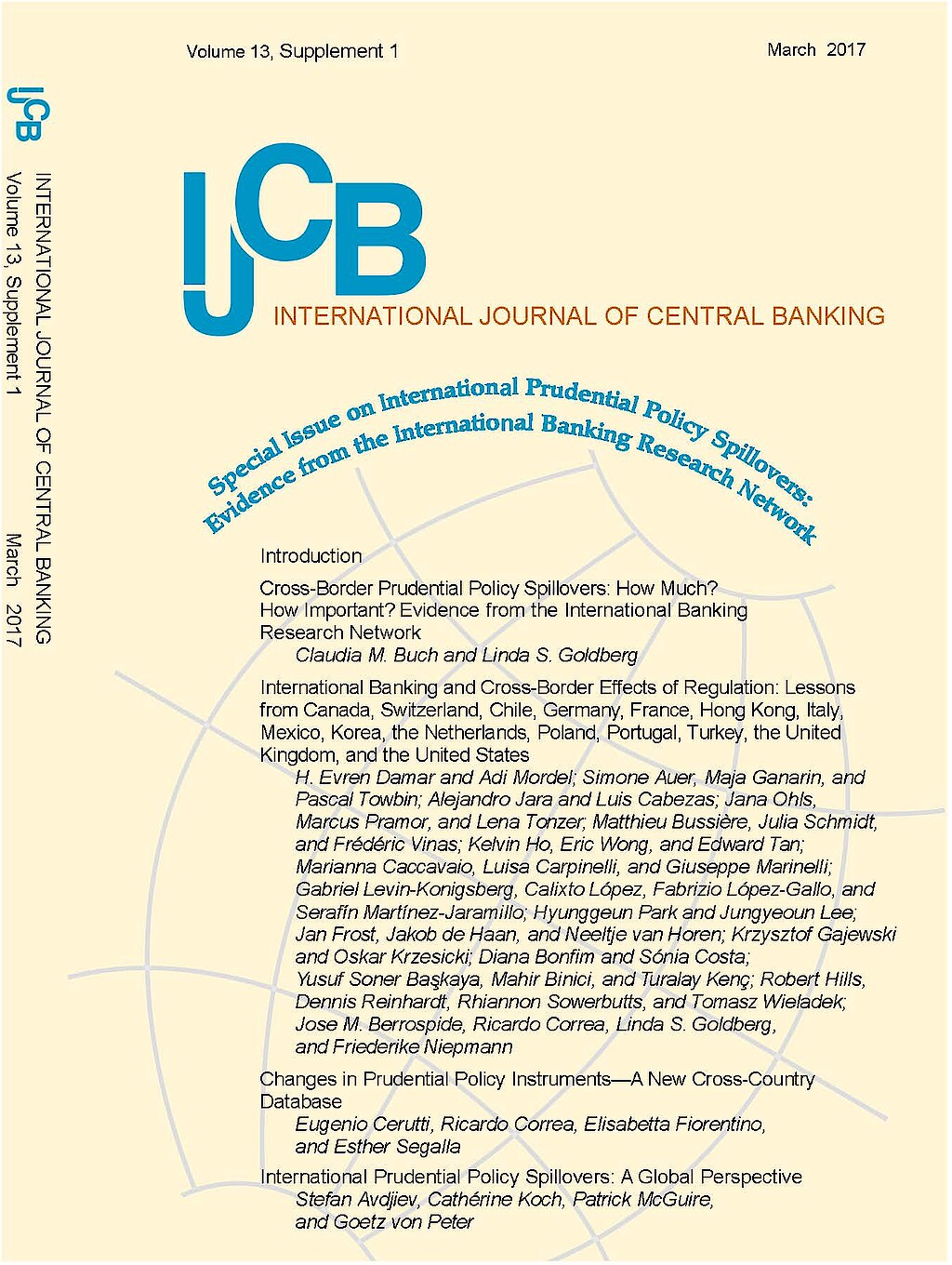
Financial Stability and Central Bank Governance
in: International Journal of Central Banking, Vol. 10 (4), 2014
Abstract
The financial crisis has ignited a debate about the appropriate objectives and the governance structure of Central Banks. We use novel survey data to investigate the relation between these traits and banking system stability focusing in particular on their role in micro-prudential supervision. We find that the separation of powers between single and multiple bank supervisors cannot explain credit risk prior or during the financial crisis. Similarly, a large number of Central Bank governance traits do not correlate with system fragility. Only the objective of currency stability exhibits a significant relation with non-performing loan levels in the run-up to the crisis. This effect is amplified for those countries with most frequent exposure to IMF missions in the past. Our results suggest that the current policy discussion whether to centralize prudential supervision under the Central Bank and the ensuing institutional changes some countries are enacting may not produce the improvements authorities are aiming at. Whether other potential improvements in prudential supervision due to, for example, external disciplinary devices, such as IMF conditional lending schemes, are better suited to increase financial stability requires further research.
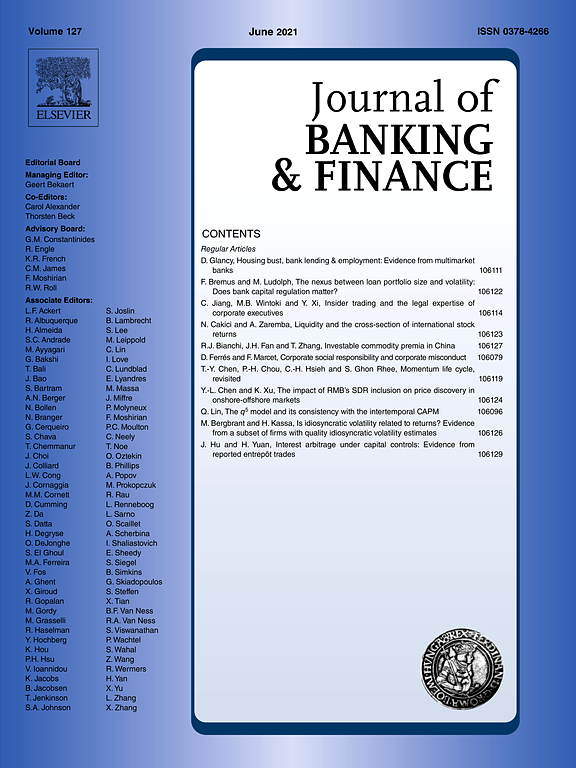
Should I Stay or Should I Go? Bank Productivity and Internationalization Decisions
in: Journal of Banking and Finance, 2014
Abstract
Differences in firm-level productivity explain international activities of non-financial firms quite well. We test whether differences in bank productivity determine international activities of banks. Based on a dataset that allows tracking banks across countries and across different modes of foreign entry, we model the ordered probability of maintaining a commercial presence abroad and the volume of banks’ international assets empirically. Our research has three main findings. First, more productive banks are more likely to enter foreign markets in increasingly complex modes. Second, more productive banks also hold larger volumes of foreign assets. Third, higher risk aversion renders entry less likely, but it increases the volume of foreign activities conditional upon entry.
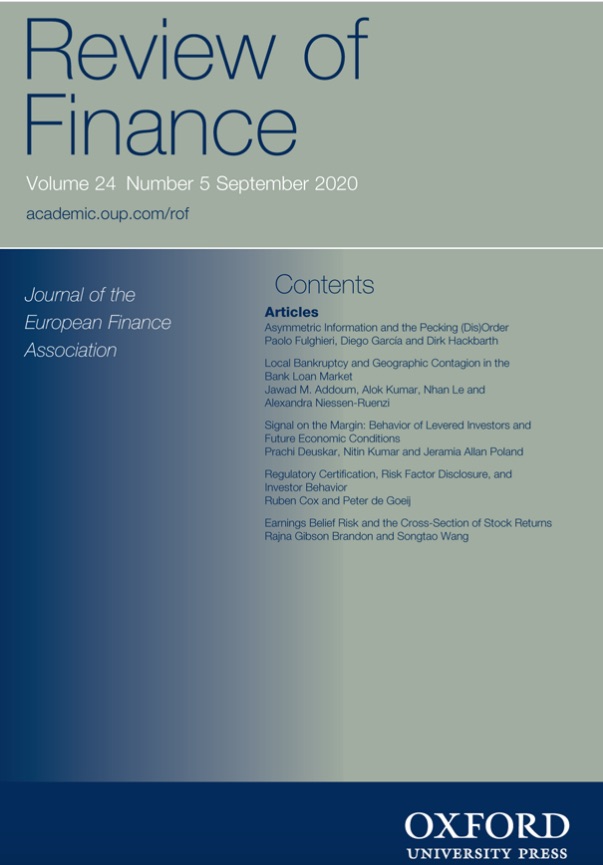
The Impact of Public Guarantees on Bank Risk-taking: Evidence from a Natural Experiment
in: Review of Finance, Vol. 18 (2), 2014
Abstract
In 2001, government guarantees for savings banks in Germany were removed following a lawsuit. We use this natural experiment to examine the effect of government guarantees on bank risk-taking. The results suggest that banks whose government guarantee was removed reduced credit risk by cutting off the riskiest borrowers from credit. Using a difference-in-differences approach we show that none of these effects are present in a control group of German banks to whom the guarantee was not applicable. Furthermore, savings banks adjusted their liabilities away from risk-sensitive debt instruments after the removal of the guarantee, while we do not observe this for the control group. We also document that yield spreads of savings banks’ bonds increased significantly right after the announcement of the decision to remove guarantees, while the yield spread of a sample of bonds issued by the control group remained unchanged. The evidence implies that public guarantees may be associated with substantial moral hazard effects.
Do Banks Benefit from Internationalization? Revisiting the Market Power–Risk Nexus
in: Review of Finance, Vol. 17 (4), 2013
Abstract
We analyze the impact of bank internationalization on domestic market power (Lerner index) and risk for German banks. Risk is measured by the official declaration of regulatory authorities that a bank is distressed. We distinguish the volume of foreign assets, the number of foreign countries, and different modes of foreign entry. Our analysis has three main results. First, higher market power is associated with lower risk. Second, holding assets in many countries reduce market power at home, but banks with a higher share of foreign assets exhibit higher market power. Third, bank internationalization is only weakly related to bank risk.

Initial Evidence from a New Database on Capital Market Restrictions
in: Panoeconomicus, Vol. 59 (3), 2012
Abstract
One of the key obstacles to the empirical analysis of capital controls has been the unavailability of a detailed set of indicators for controls that cover a broad set of countries over a range of years. In this paper, we propose a new set of indicators derived from the Annual Reports on Exchange Arrangements and Export Restrictions. Contrary to most earlier attempts to construct control indicators from this source, our set of indices allows one to analyze the control intensity separately for inflow, outflow and repatriation controls. An additional set of indicators features information on the institutional design of controls. At first glance, the data show that the financial crisis caused a surge in capital market restrictions, most notably concerning the derivatives market. This reflex, which is not justified by the scarce empirical evidence on the success of controls, shows the importance of having a valid measure to allow an econometrically sound policy evaluation in this field. The data are available from the author upon request.
Working Papers

Do We Want These Two to Tango? On Zombie Firms and Stressed Banks in Europe
in: ECB Working Paper, 2017
Abstract
We show that the speed and type of corporate deleveraging depends on the interaction between corporate and financial sector health. Based on granular bank-firm data pertaining to small and medium-sized enterprises (SME) from five stressed and two non-stressed euro area economies, we show that “zombie” firms generally continued to lever up during the 2010–2014 period. Whereas relationships with stressed banks reduce SME leverage on average, we also show that zombie firms that are tied to weak banks in euro area periphery countries increase their indebtedness even further. Sustainable economic recovery therefore requires both: deleveraging of banks and firms.

Do We Want These Two to Tango? On Zombie Firms and Stressed Banks in Europe
in: IWH Discussion Papers, No. 13, 2017
Abstract
We show that the speed and type of corporate deleveraging depends on the interaction between corporate and financial sector health. Based on granular bank-firm data pertaining to small and medium-sized enterprises (SME) from five stressed and two non-stressed euro area economies, we show that “zombie” firms generally continued to lever up during the 2010–2014 period. Whereas relationships with stressed banks reduce SME leverage on average, we also show that zombie firms that are tied to weak banks in euro area periphery countries increase their indebtedness even further. Sustainable economic recovery therefore requires both: deleveraging of banks and firms.

Inside Asset Purchase Programs: The Effects of Unconventional Policy on Banking Competition
in: ECB Working Paper Series, No. 2017, 2017
Abstract
We test if unconventional monetary policy instruments influence the competitive conduct of banks. Between q2:2010 and q1:2012, the ECB absorbed Euro 218 billion worth of government securities from five EMU countries under the Securities Markets Programme (SMP). Using detailed security holdings data at the bank level, we show that banks exposed to this unexpected (loose) policy shock mildly gained local loan and deposit market shares. Shifts in market shares are driven by banks that increased SMP security holdings during the lifetime of the program and that hold the largest relative SMP portfolio shares. Holding other securities from periphery countries that were not part of the SMP amplifies the positive market share responses. Monopolistic rents approximated by Lerner indices are lower for SMP banks, suggesting a role of the SMP to re-distribute market power differentially, but not necessarily banking profits.

Uncertainty, Financial Crises, and Subjective Well-being
in: IWH Discussion Papers, No. 2, 2017
Abstract
This paper focuses on the effect of uncertainty as reflected by financial market variables on subjective well-being. The analysis is based on Eurobarometer surveys, covering 20 countries over the period from 2000 to 2013. Individuals report lower levels of life satisfaction in times of higher uncertainty approximated by stock market volatility. This effect is heterogeneous across respondents: The probability of being unsatisfied is higher for respondents who are older, less educated, and live in one of the GIIPS countries of the euro area. Furthermore, higher uncertainty in combination with a financial crisis increases the probability of reporting low values of life satisfaction.

To Separate or not to Separate Investment from Commercial Banking? An Empirical Analysis of Attention Distortion under Multiple Tasks
in: IWH Discussion Papers, No. 2, 2016
Abstract
In the wake of the 2008/2009 financial crisis, a number of policy reports (Vickers, Liikanen, Volcker) proposed to separate investment banking from commercial banking to increase financial stability. This paper empirically examines one theoretical justification for these proposals, namely attention distortion under multiple tasks as in Holmstrom and Milgrom (1991). Universal banks can be viewed as combining two different tasks (investment banking and commercial banking) in the same organization. We estimate pay-performance sensitivities for different segments within universal banks and for pure investment and commercial banks. We show that the pay-performance sensitivity is higher in investment banking than in commercial banking, no matter whether it is organized as part of a universal bank or in a separate institution. Next, the paper shows that relative pay-performance sensitivities of investment and commercial banking are negatively related to the quality of the loan portfolio in universal banks. Depending on the specification, we obtain a reduction in problem loans when investment banking is removed from commercial banks of up to 12 percent. We interpret the evidence to imply that the higher pay-performance sensitivity in investment banking directs the attention of managers away from commercial banking within universal banks, consistent with Holmstrom and Milgrom (1991). Separation of investment banking and commercial banking may indeed be associated with a reduction in risk in commercial banking.


