

Europas populistische Parteien im Aufwind: die dunkle Seite von Globalisierung und technologischem Wandel?
Hat das Erstarken von populistischen Parteien ökonomische Ursachen?
Die Globalisierung hat zwar allgemein den Wohlstand gesteigert, aber in vielen Regionen Europas auch zu Arbeitslosigkeit, Lohnungleichheit, Abwanderung und dadurch Überalterung geführt. Das IWH und seine Partner untersuchen, ob diese ökonomischen Lasten Mitursache für den Aufschwung von Populisten sind. Eine aufwändige Kausalanalyse soll zeigen, inwiefern wirtschaftliche Härten zu Wählerstimmen für populistische Parteien führen. Um belastbare Ergebnisse zu erhalten, analysieren die Forschenden die Zusammenhänge für mehrere Länder Europas. Dabei werden insbesondere auch Staaten Mittel- und Osteuropas einbezogen.
Das Forschungsprojekt will eine Debatte bereichern, in der Populismus vor allem als kulturelle Gegenreaktion auf Liberalisierung, offene Grenzen und Migration gedeutet wird. Darüber hinaus können die Ergebnisse zu wichtigen Empfehlungen an die Politik führen.
Projektseite der VolkswagenStiftung
- Mittelgeber: VolkswagenStiftung
- Laufzeit: 2020-2024
- Koordinator: IWH
- Projektpartner: University of Nottingham, Akademie věd České republiky/CERGE-EI, University of Glasgow
- Forschungsgruppe: Betriebliche Dynamiken und Beschäftigungsergebnisse
- Abteilung: Strukturwandel und Produktivität
Abbildungen
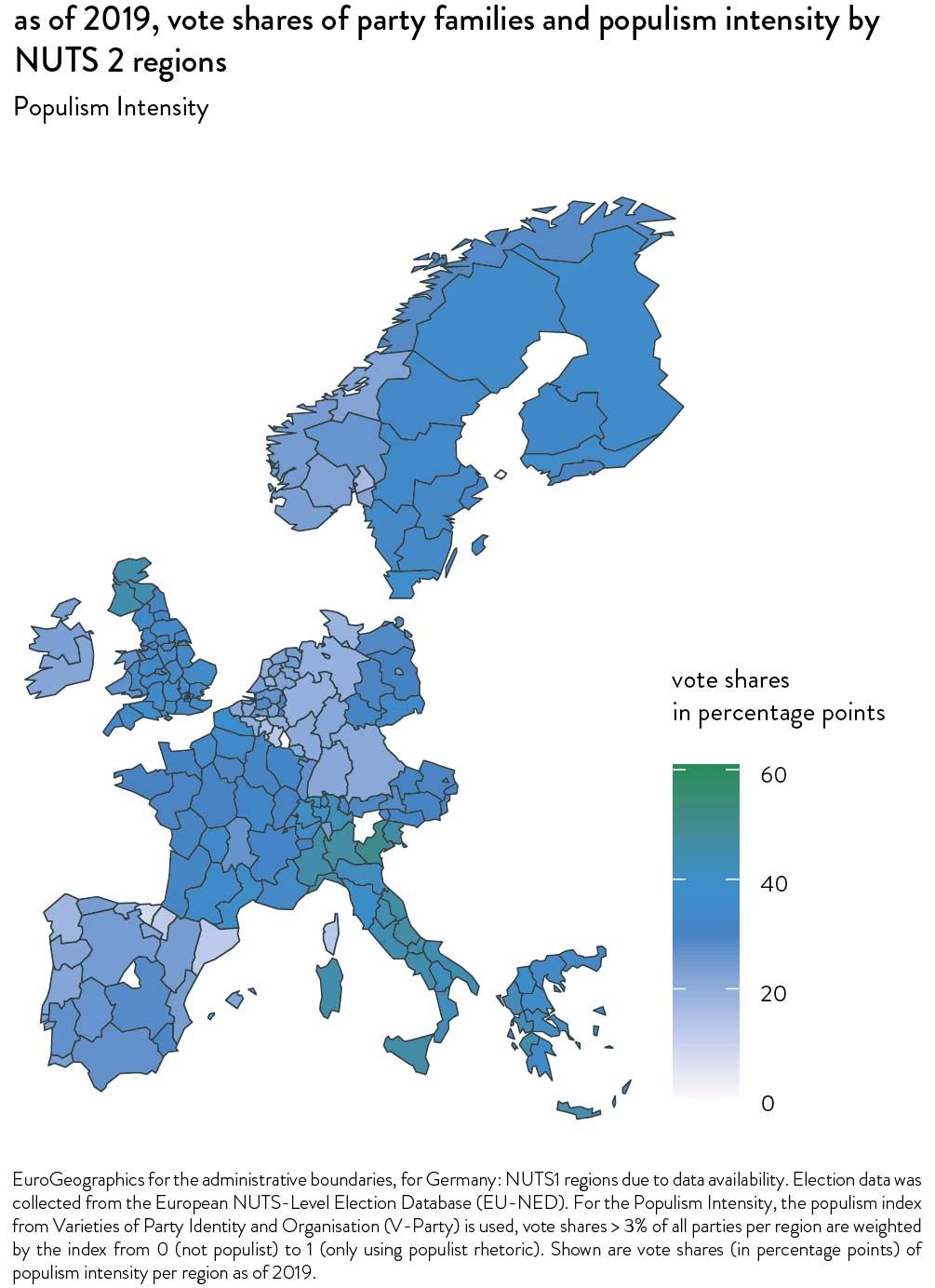
Vote shares for national parliaments 1 (4)
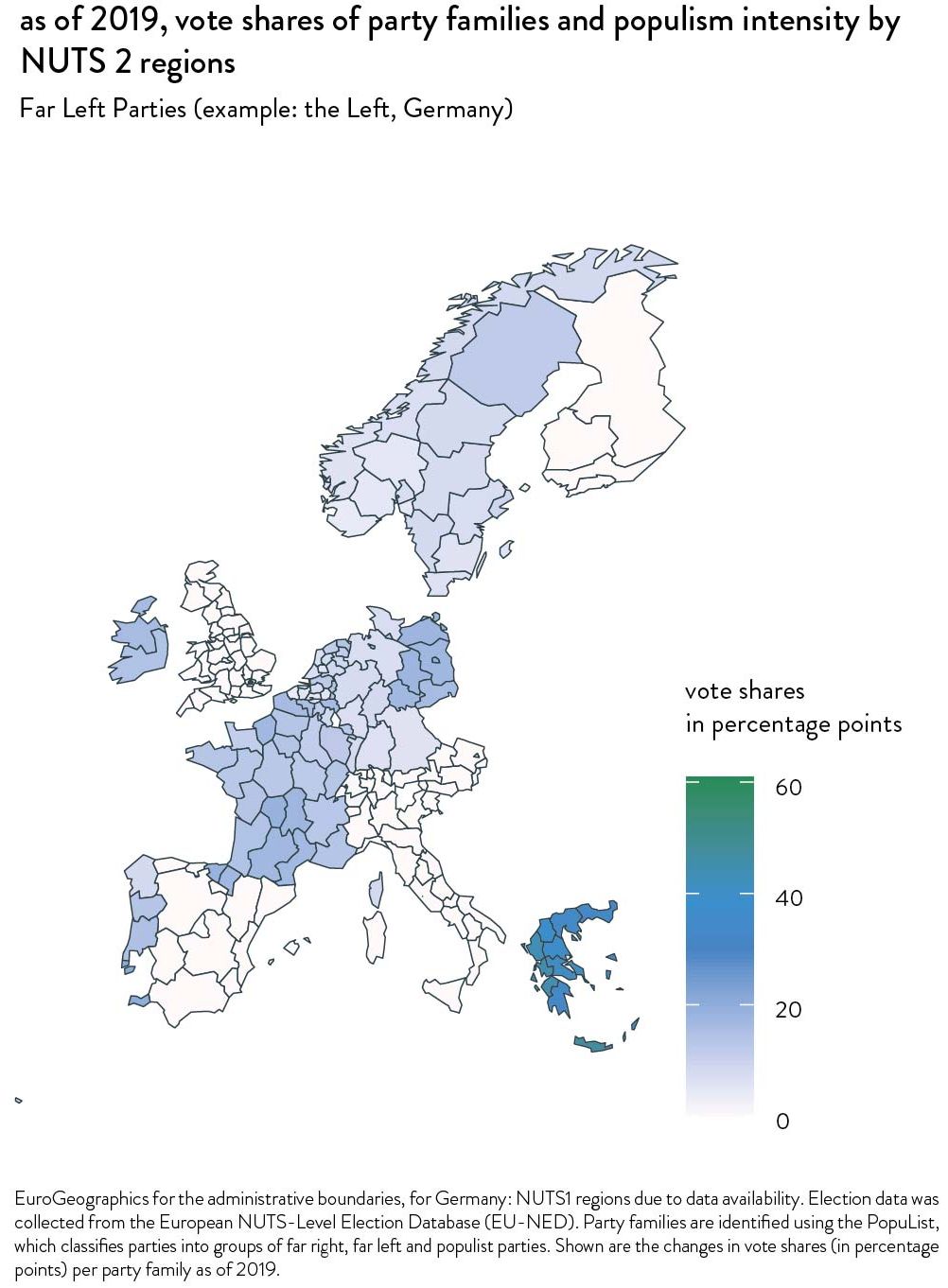
Vote shares for national parliaments 2 (4)
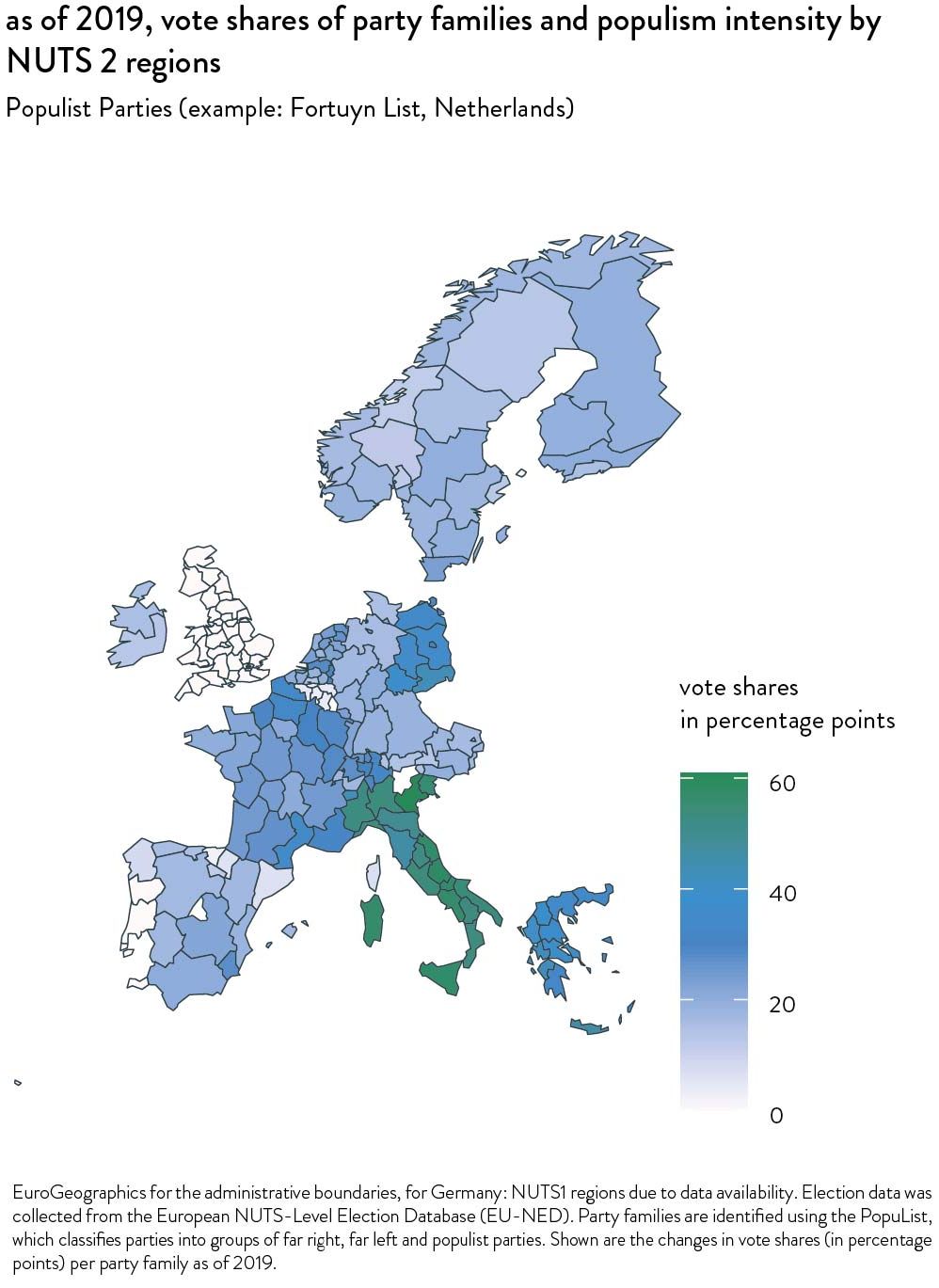
Vote shares for national parliaments 3 (4)
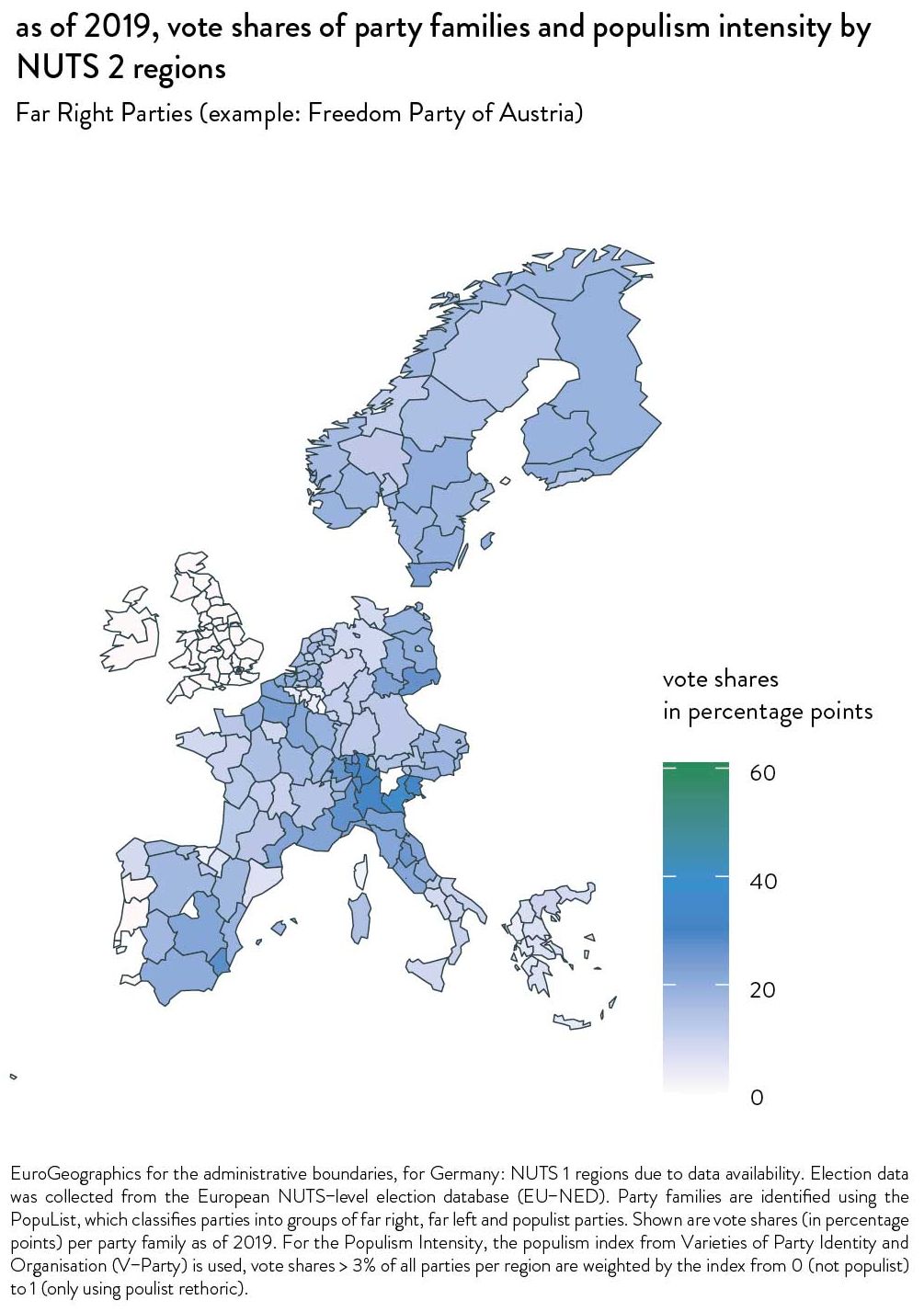
Vote shares for national parliaments 4 (4)
Short run changes in vote shares for national parliaments 1 (4)
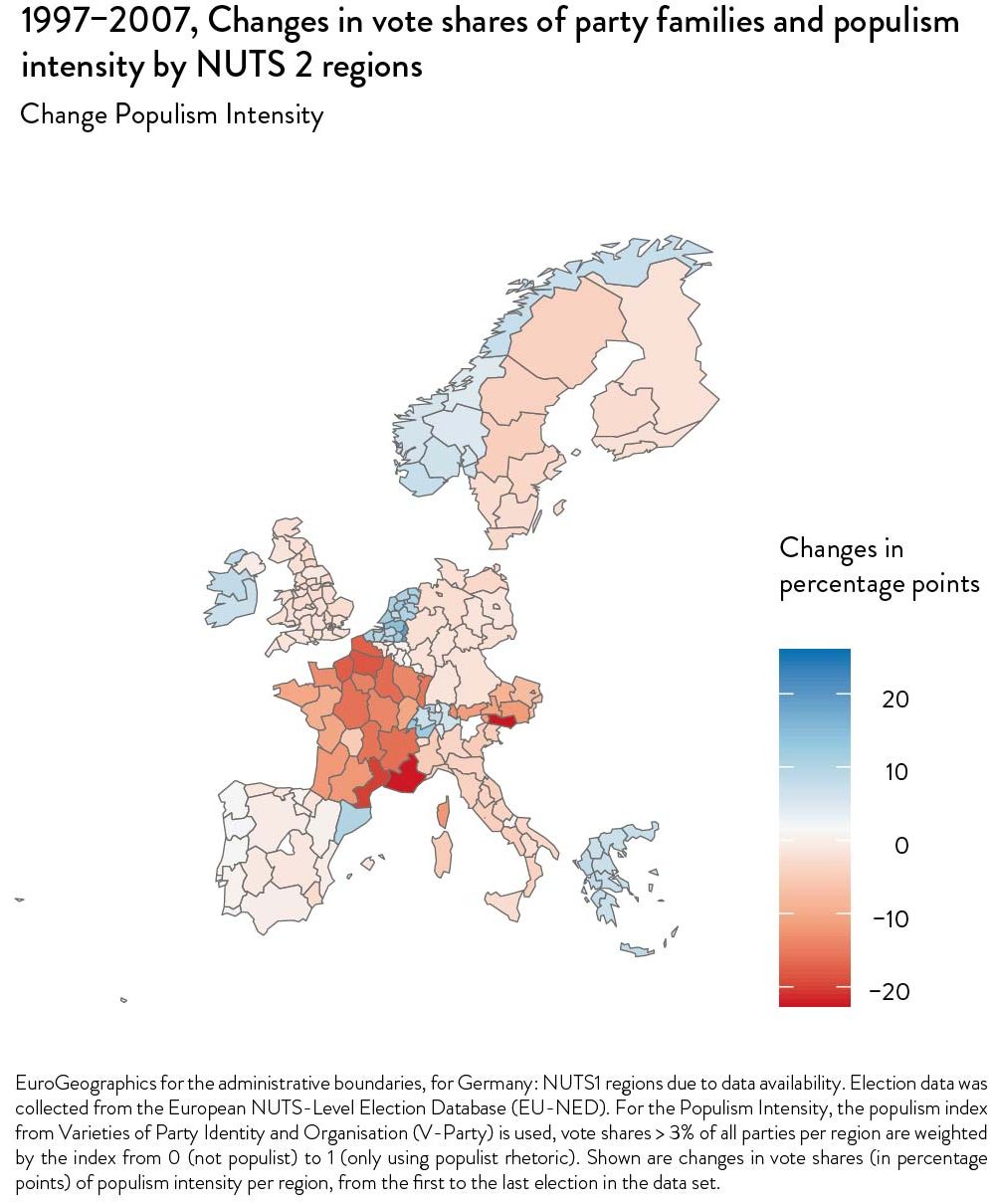
Short run changes in vote shares for national parliaments 2 (4)
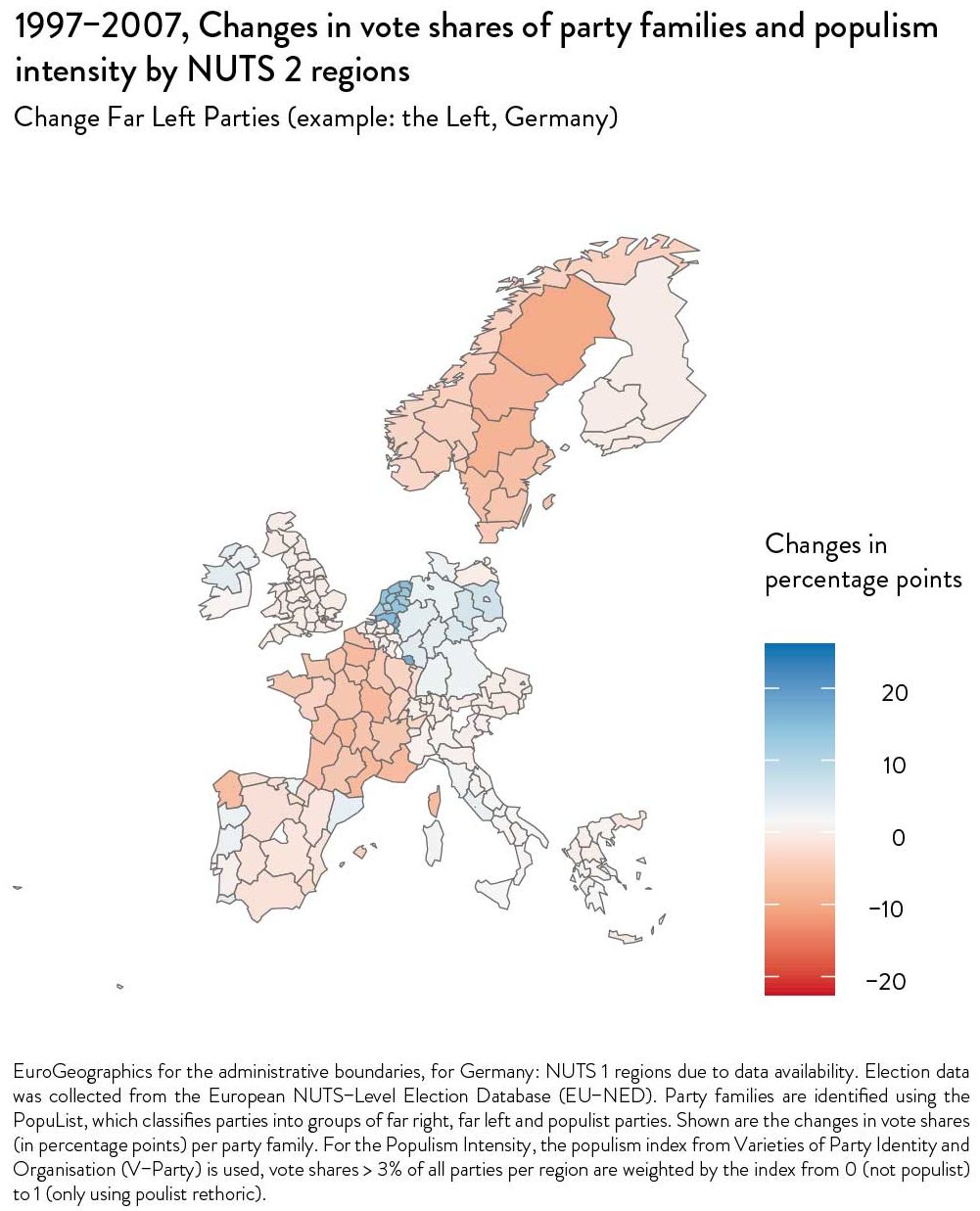
Short run changes in vote shares for national parliaments 3 (4)
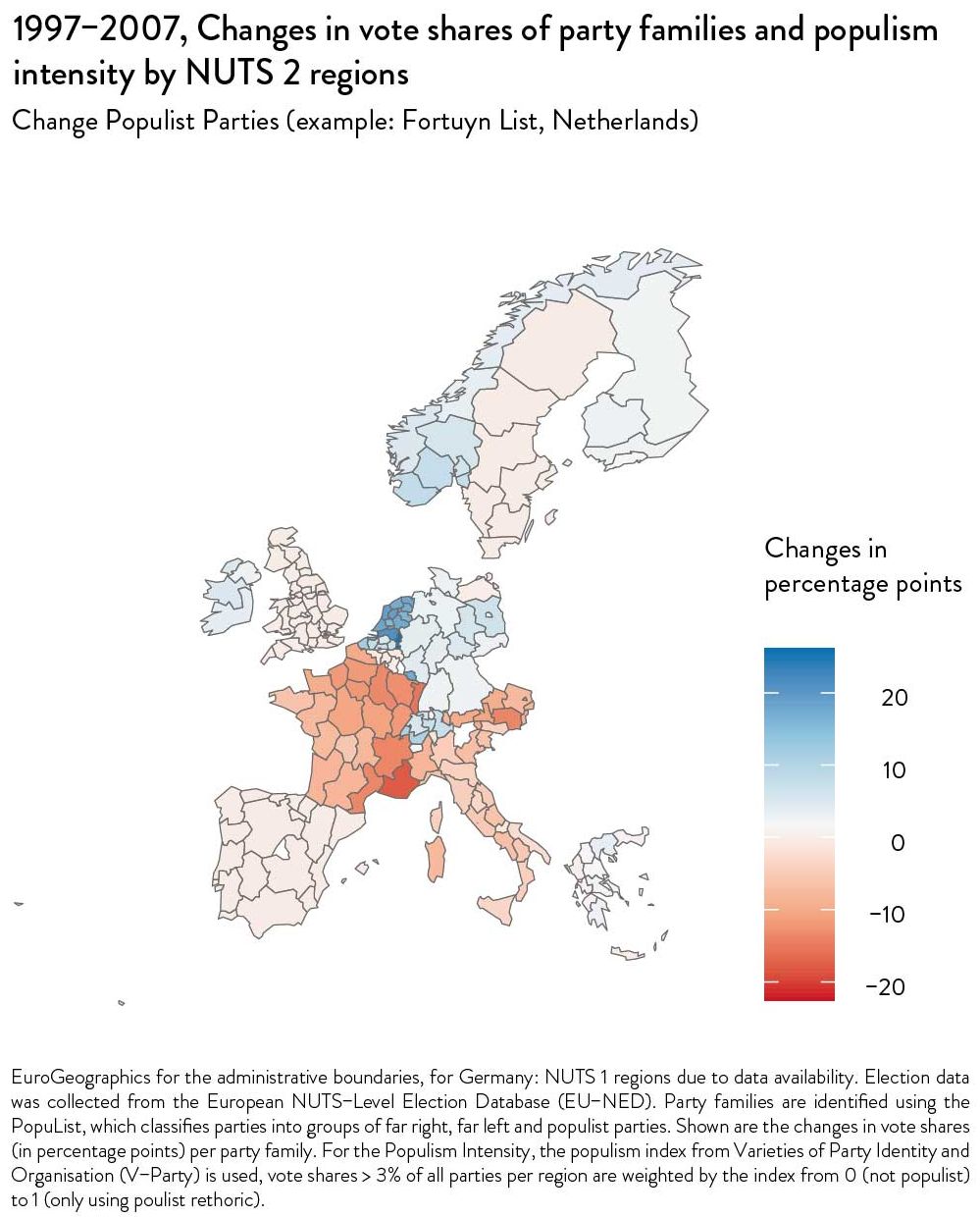
Short run changes in vote shares for national parliaments 4 (4)
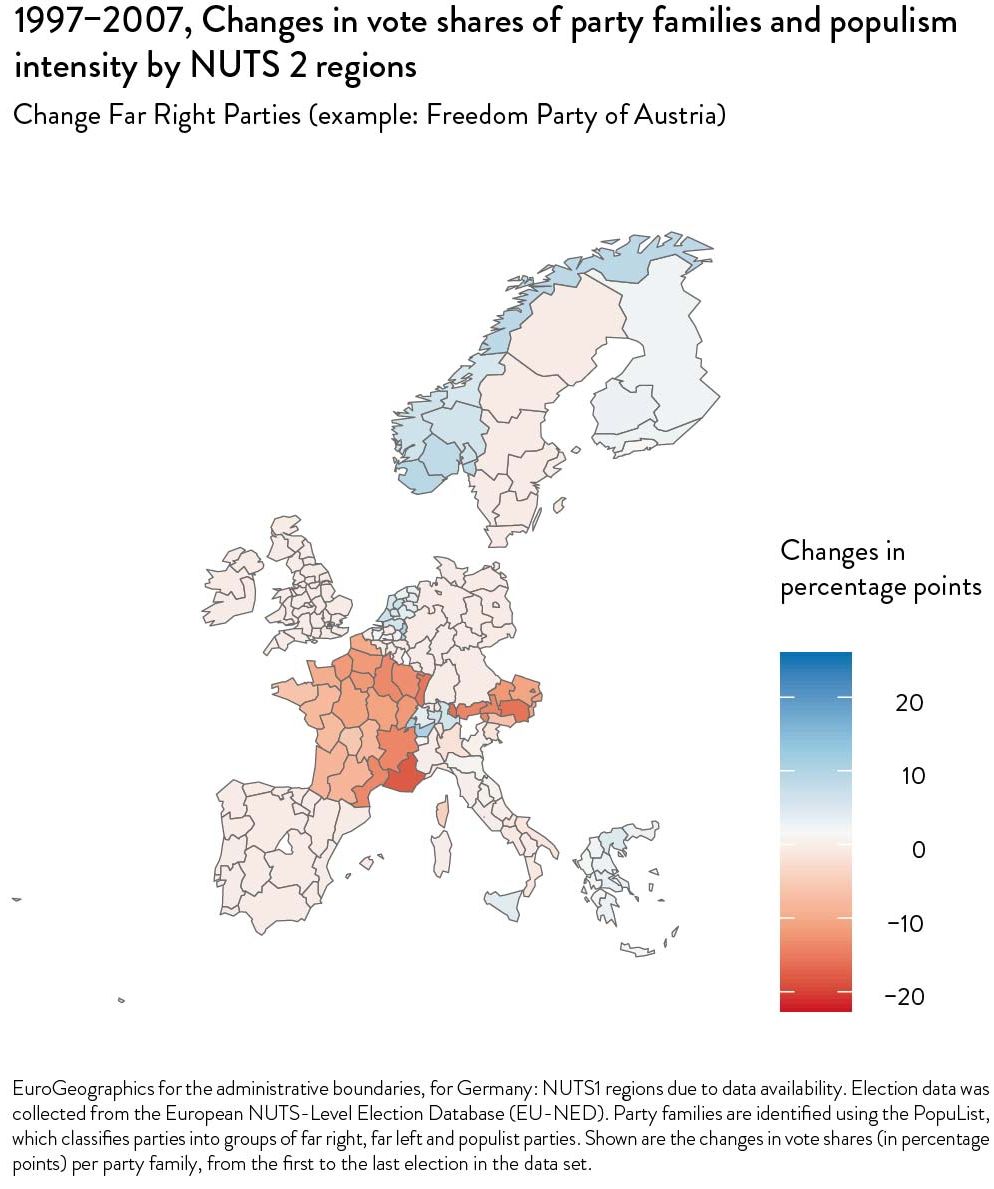
Long run changes in vote shares for national parliaments 1 (4)
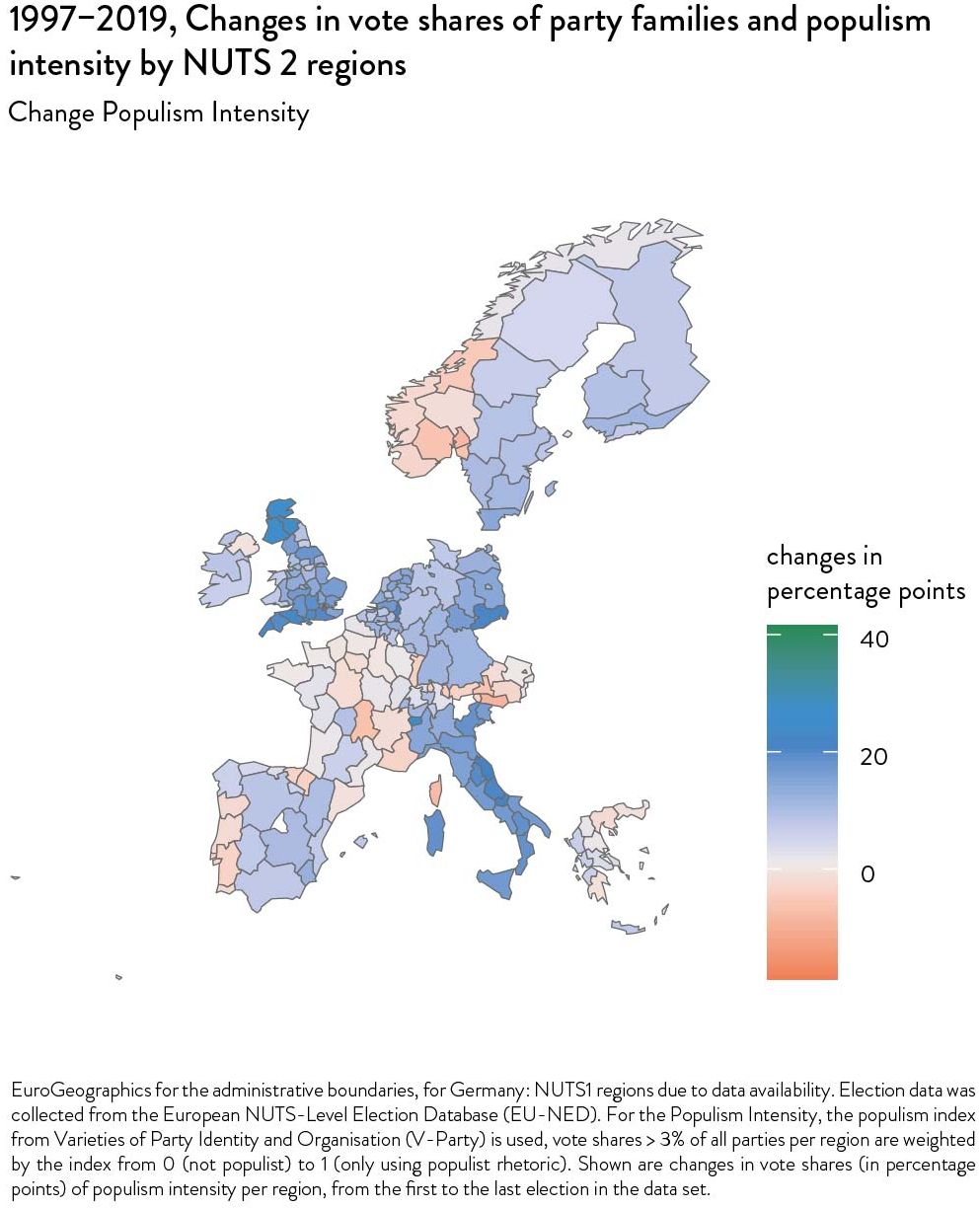
Long run changes in vote shares for national parliaments 2 (4)
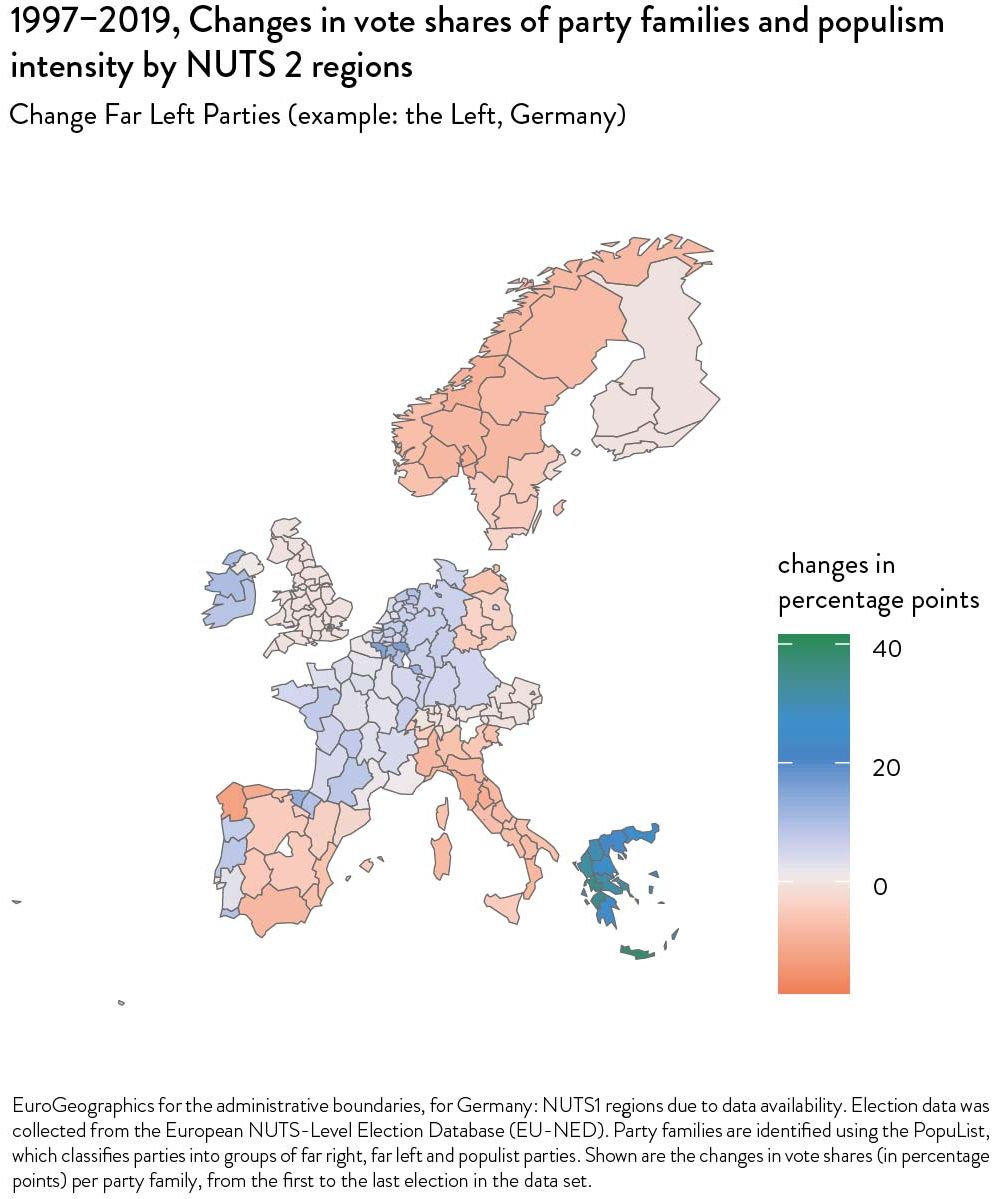
Long run changes in vote shares for national parliaments 3 (4)
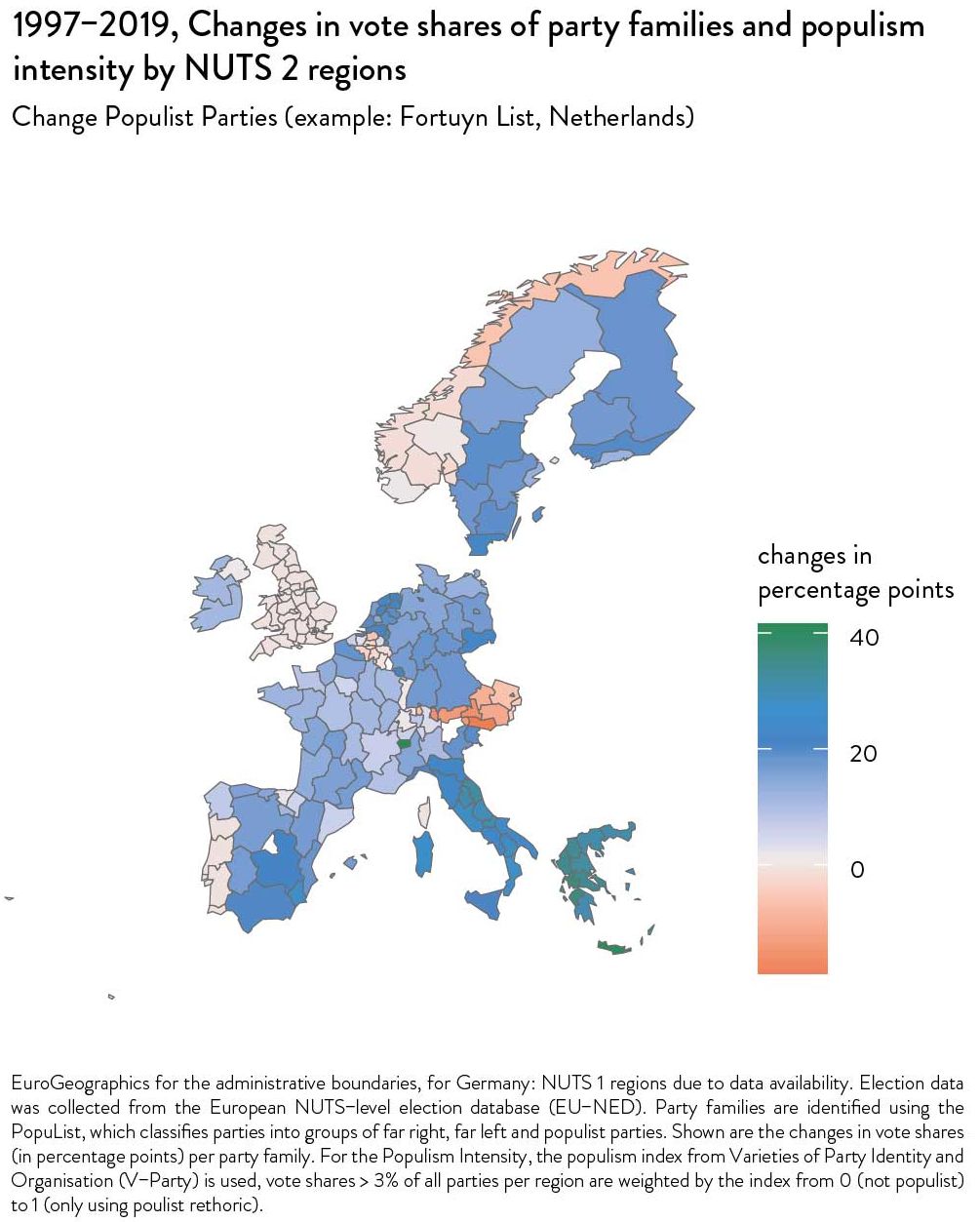
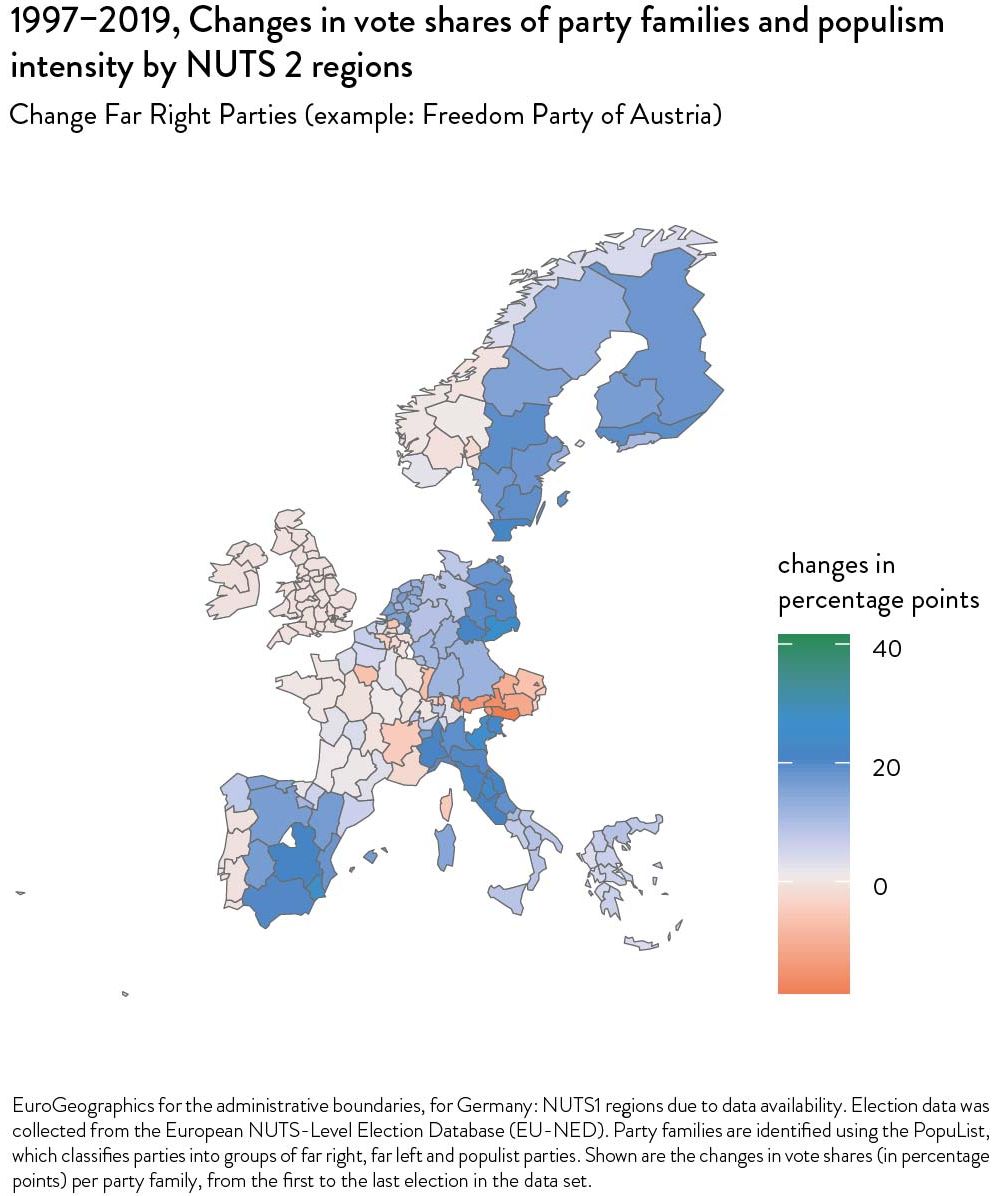
Long run changes in vote shares for national parliaments 4 (4)
Veröffentlichungen
Political Preferences Through Stages of the COVID-19 Pandemic
in: Political Research Quarterly, im Erscheinen
Abstract
<p>How durable are the political accountability effects of the worst pandemic in a century? We track the effects of the COVID-19 pandemic on political preferences through its “high” and “low” phases in the Czech Republic. Uniquely, we ask about the effects of both the health and the economic costs of the pandemic measured at both personal and municipality levels. Consistent with the literature, we estimate effects suggestive of political accountability of leaders during “high” pandemic phases without higher support for non-democratic alternatives. However, we also find that the pandemic political accountability effects are mostly short-lived, and do not extend to the first post-pandemic elections.</p>
Voting under Debtor Distress
in: Electoral Studies, June 2025
Abstract
<p>There is growing evidence on the role of economic conditions in the recent successes of populist and extremist parties. However, little is known about the role of over-indebtedness, even though debtor distress has grown in Europe following the financial crisis. We study the unique case of the Czech Republic, where by 2017, nearly one in ten citizens had been served at least one debtor distress warrant even though the country consistently features low unemployment. Our municipality-level difference-in-differences analysis asks about the voting consequences of a rise in debtor distress following a 2001 deregulation of consumer-debt collection. We find that debtor distress has a positive effect on support for (new) extreme right and populist parties, but a negative effect on a (traditional) extreme-left party. The effects of debtor distress we uncover are robust to whether and how we control for economic hardship; the effects of debtor distress and economic hardship are of similar magnitude, but operate in opposing directions across the political spectrum.</p>
Import Shocks and Voting Behavior in Europe Revisited
in: European Journal of Political Economy, June 2024
Abstract
We provide first evidence for the long-run causal impact that Chinese imports to European regions had on voting outcomes and revisit earlier estimates of the short-run impact for a methodological reason. The fringes of the political spectrum gained ground many years after the China shock plateaued and, unlike an earlier study by Colantone and Stanig (2018b), we do not find any robust evidence for a short-run effect on far-right votes. Instead, far-left and populist parties gained in the short run. We identify persistent long-run effects of import shocks on voting. These effects are biased towards populism and, to a lesser extent, to the far-right.

Forced Migration, Staying Minorities, and New Societies: Evidence from Postwar Czechoslovakia
in: American Journal of Political Science, Nr. 2, 2023
Abstract
Can staying minorities who evade ethnic cleansing affect political outcomes in resettled communities? After World War Two, three million ethnic Germans were expelled from Czechoslovakia's Sudetenland, but some were allowed to stay, many of them left-leaning antifascists. We study quasi-experimental local variation in expulsion policies, a result of the surprising presence of the U.S. Army, which indirectly helped antifascist Germans stay. We find a long-lasting footprint: Communist party support, party cells, and far-left values are stronger today where antifascist Germans stayed in larger numbers. Postwar German Communist elites appear to be behind this effect along with the intergenerational transmission of values among active party members.
Bleibender Eindruck: Nicht vertriebene Sudetendeutsche prägen die politische Landschaft in Tschechien bis heute
in: ifo Dresden berichtet, Nr. 6, 2022
Abstract
Nach dem Zweiten Weltkrieg wurden mehr als 3 Mill. Sudetendeutsche aus der Tschechoslowakei ver trieben. Rund 100 000 unverzichtbare Industriebeschäftigte sowie 100 000 sudetendeutsche Antifaschisten blieben jedoch. Ihr Schicksal war bisher weitgehend unbeleuchtet. Wir zeigen, dass in Regionen mit vielen zurück gebliebenen deutschen Antifaschisten die Kommunistische Partei Tschechiens bis heute stärker verankert ist. Die deutschen Antifaschisten engagierten sich frühzeitig für den Kommunismus und gaben über Partei strukturen und innerhalb von Familien ihre Werte weiter. Nichtvertriebene können damit eine neue Mehr heitsgesellschaft nach ethnischen Säuberungen mitprägen, auch wenn sie selbst zur Minderheit gehören.
Income Shocks, Political Support and Voting Behaviour
in: IWH Discussion Papers, Nr. 1, 2024
Abstract
We provide new evidence on the effects of economic shocks on political support, voting behaviour and political opinions over the last 25 years. We exploit a sudden, large and long-lasting shock in the form of job loss and trace out its impact on individual political outcomes for up to 10 years after the event. The availability of detailed information on households before and after the job loss event allows us to reweight a comparison group to closely mimic the job losers in terms of their observable characteristics, pre-existing political support and voting behaviour. We find consistent, long-lasting but quantitatively small effects on support and votes for the incumbent party, and short-lived effects on political engagement. We find limited impact on the support for fringe or populist parties. In the context of Brexit, opposition to the EU was much higher amongst those who lost their jobs, but this was largely due to pre-existing differences which were not exacerbated by the job loss event itself.
IWH-Pressemitteilungen
- IWH-Pressemitteilung: Ursachen von Populismus: IWH beginnt internationales Forschungsprojekt
- IWH-Pressemitteilung: Chinesische Massenimporte stärken extreme Parteien
Veranstaltungen
Medienbeiträge
Online-Tageszeitung Aktuálně.cz
IDEA Talks
Ansprechpartner

Abteilungsleiter
Für Rückfragen stehe ich Ihnen gerne zur Verfügung.
+49 345 7753-708 Anfrage per E-Mail
Dieses Projekt wird gefördert von der VolkswagenStiftung.


