Veranstaltung
13
JAN 2026

14:15 - 15:45
IWH Research Seminar

The New Keynesian Climate Model

Climate change confronts economies with two inflationary challenges: climateflation, driven by physical climate impacts, and greenflation, arising from mitigation efforts. This paper develops and estimates a nonlinear New Keynesian Climate model that merges the long-term dynamics of Integrated Assessment Models with the business cycle fluctuations captured by DSGE frameworks.

Wer
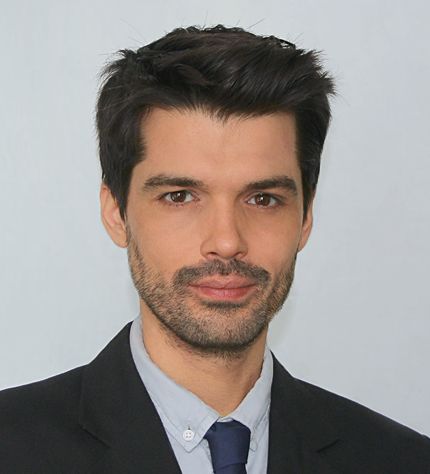
Gauthier Vermandel  (Ecole Polytechnique)
Wo
IWH, conference room
Gauthier Vermandel

Zur Person

Gauthier Vermandel is a full-time researcher at Ecole Polytechnique in the Department of Applied Mathematics (CMAP, Institut Polytechnique de Paris), on leave from my tenured Associate Professor position at Université Paris-Dauphine & PSL. His main research fields are quantitative macroeconomics, climate change, inference of nonlinear structural models, and business cycle theory.


To join the lecture via Zoom, please register here.

Climate change confronts economies with two inflationary challenges: climateflation, driven by physical climate impacts, and greenflation, arising from mitigation efforts. This paper develops and estimates a nonlinear New Keynesian Climate model that merges the long-term dynamics of Integrated Assessment Models with the business cycle fluctuations captured by DSGE frameworks. This unified framework enables a systematic analysis of how climate change and mitigation policies influence inflation, output, and interest rates. We find that nominal rigidities are crucial for determining optimal carbon pricing: neglecting them leads to miscalibrated carbon taxes, excessive inflation, and reduced consumption. Simulations also reveal that Paris-aligned mitigation paths generate higher inflation than laissez-faire approaches. Nonetheless, central banks can counter these inflationary pressures by adapting policy to a rising natural interest rate and accepting short-term GDP losses. These results highlight the need to align monetary frameworks with climate policy goals to ensure macroeconomic stability during the net-zero transition.

Ihr Kontakt

Mitglied der Leibniz-Gemeinschaft LogoTotal-Equality-LogoGefördert durch das BMWK