Juniorprofessorin Dr. Melina Ludolph

Juniorprofessorin Dr. Melina Ludolph

Aktuelle Position

seit 1/23

Leiterin der Forschungsgruppe Banken, Regulierung und Anreizstrukturen

Leibniz-Institut für Wirtschaftsforschung Halle (IWH)

seit 9/21

Wissenschaftliche Mitarbeiterin in der Abteilung Gesetzgebung, Regulierung und Faktormärkte

Leibniz-Institut für Wirtschaftsforschung Halle (IWH)

seit 9/21

Juniorprofessorin

Otto-von-Guericke-Universität Magdeburg

Forschungsschwerpunkte

  • Bankenregulierung
  • Finanzstabilität
  • Finanzkrisen
  • angewandte Ökonometrie

Melina Ludolph ist seit September 2021 wissenschaftliche Mitarbeiterin am IWH und Juniorprofessorin an der Otto-von-Guericke-Universität Magdeburg. Sie forscht zu den Themen Bankenregulierung, Finanzstabilität, Finanzkrisen sowie angewandte Ökonometrie.

Melina Ludolph studierte und promovierte an der Humboldt-Universität zu Berlin.

Ihr Kontakt

Juniorprofessorin Dr. Melina Ludolph
- Abteilung Gesetzgebung, Regulierung und Faktormärkte
Nachricht senden +49 345 7753-773 Persönliche Seite

Publikationen

Zitationen
31

cover_journal-of-development-economics.jpg

The Limits of Local Laws in Global Supply Chains: Cutting Ties or “Edutrading” Procurement Partners?

Hendrik Keilbach Michael Koetter Melina Ludolph Fabian Woebbeking

in: Journal of Development Economics, Vol. 182 (June), 2026

Abstract

We study the procurement patterns of non-listed firms and examine how these often-overlooked, yet pivotal players in global supply chains adjust their sourcing when they anticipate accountability for externalities beyond their organizational boundaries. Using granular customs data and a surprise information release about the German Supply Chain Due Diligence Act, product-level regressions reveal that importing firms are 3.5 percentage points less likely to source a product from countries where the relevant production sector exhibits elevated ESG-related risks, suggesting that firms tend to cut ties with higher-risk suppliers. The effects are concentrated among firms with well-diversified supplier networks for a product and higher profitability, suggesting they have the necessary flexibility to respond quickly to anticipated regulatory pressure. Our findings suggest that mandates requiring firms to incorporate broad sustainability considerations into their operational decisions may have limits, particularly for non-listed firms.

Publikation lesen

cover_journal-of-corporate-finance.jpg

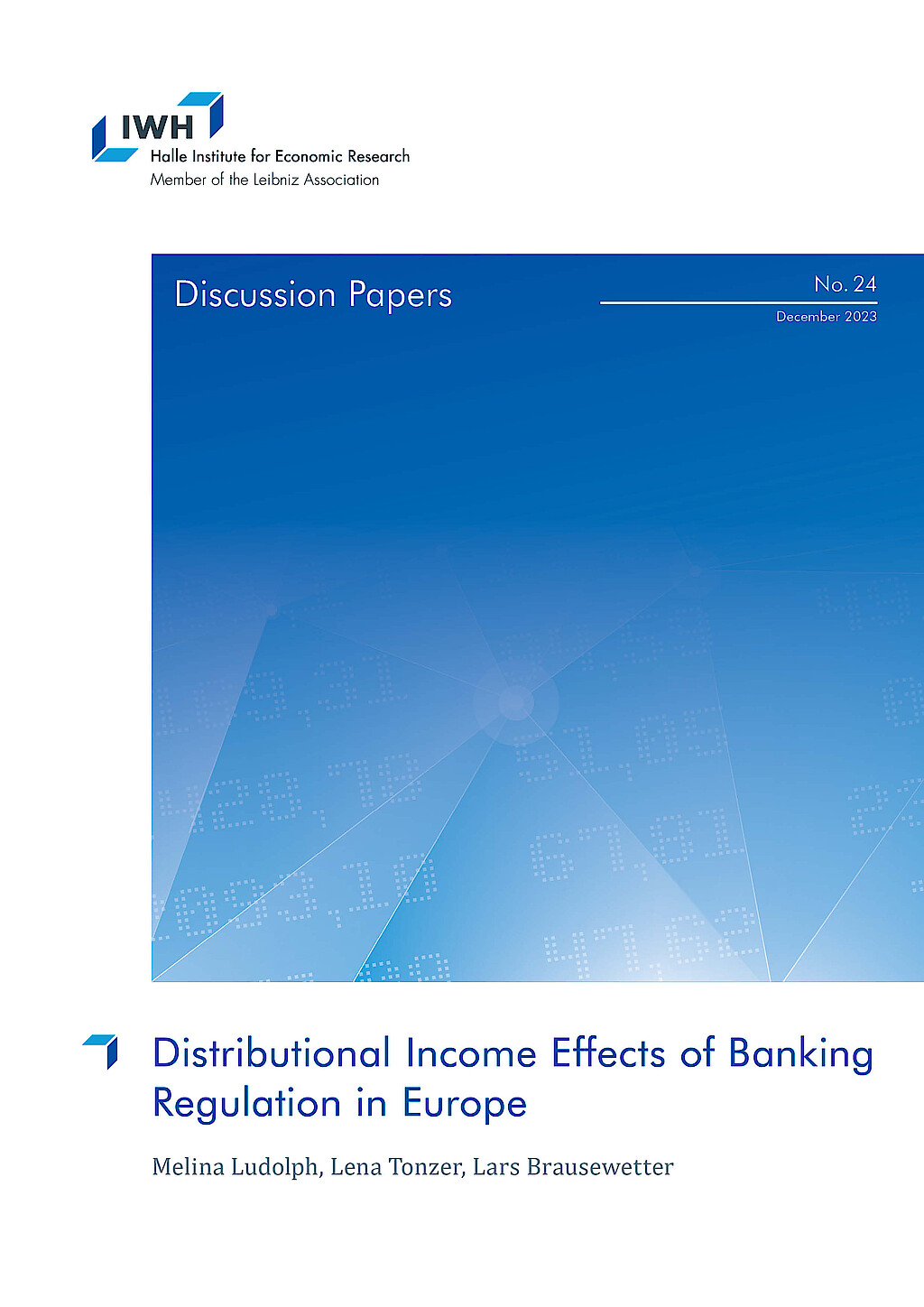
Distributional Income Effects of Banking Regulation in Europe

Melina Ludolph Lena Tonzer Lars Brausewetter

in: Journal of Corporate Finance, Vol. 100 (July), 2026

Abstract

We study the impact of stricter and more harmonized banking regulation along the income distribution using household survey data for 25 EU countries. Exploiting country-level heterogeneity in the implementation of European Banking Union directives allows us to control for confounders and identify effects. Our results show that these regulatory reforms aimed at increasing financial system resilience affect households heterogeneously and result in a widening of the income distribution. These results are dependent on a country’s ex-ante regulatory stringency, and more pronounced in countries with stronger bank dependence. Furthermore, we find that more stringent regulation reduces income growth for low-income households primarily due to exits from employment, whereas affluent households tend to experience increased growth rates for employee and self-employed income.

Publikation lesen

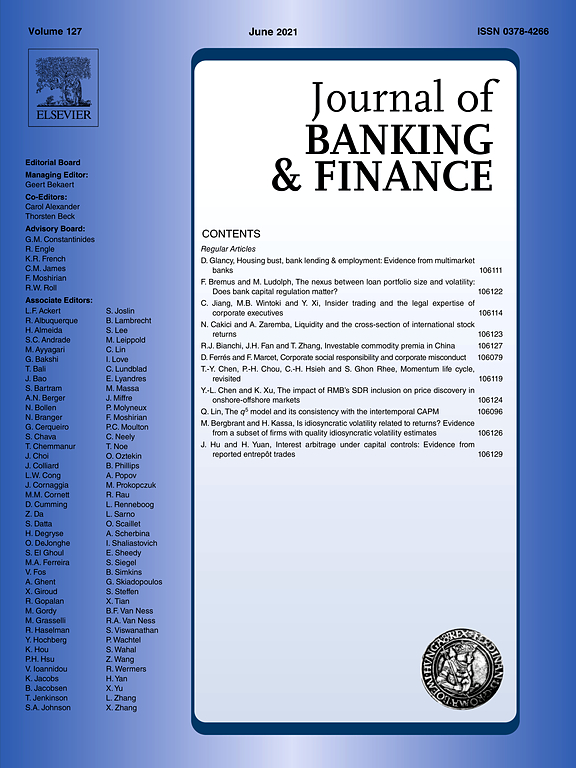
cover_journal-of-banking-and-finance.jpg

The Nexus between Loan Portfolio Size and Volatility: Does Bank Capital Regulation Matter?

Franziska Bremus Melina Ludolph

in: Journal of Banking and Finance, Vol. 127 (June), 2021

Abstract

This paper analyzes the effects of bank capital regulation on the link between bank size and volatility. Using bank-level data for 27 advanced economies over the 2000–2014 period, we estimate a power law that relates the volume of a bank’s loan portfolio to the volatility of loan growth. Our analysis reveals, first, that more stringent capital regulation weakens the size-volatility nexus. Hence, in countries with more stringent capital regulation, large banks show, ceteris paribus, lower loan portfolio volatility. Second, the effect of tighter capital requirements on the size-volatility nexus becomes stronger for the upper tail of the bank size distribution. This is in line with capitalization decreasing with bank size, such that larger banks tend to be more affected by increasing capital requirements. Third, in countries with higher sectoral capital buffers, the size-volatility nexus is weaker.

Publikation lesen

Arbeitspapiere

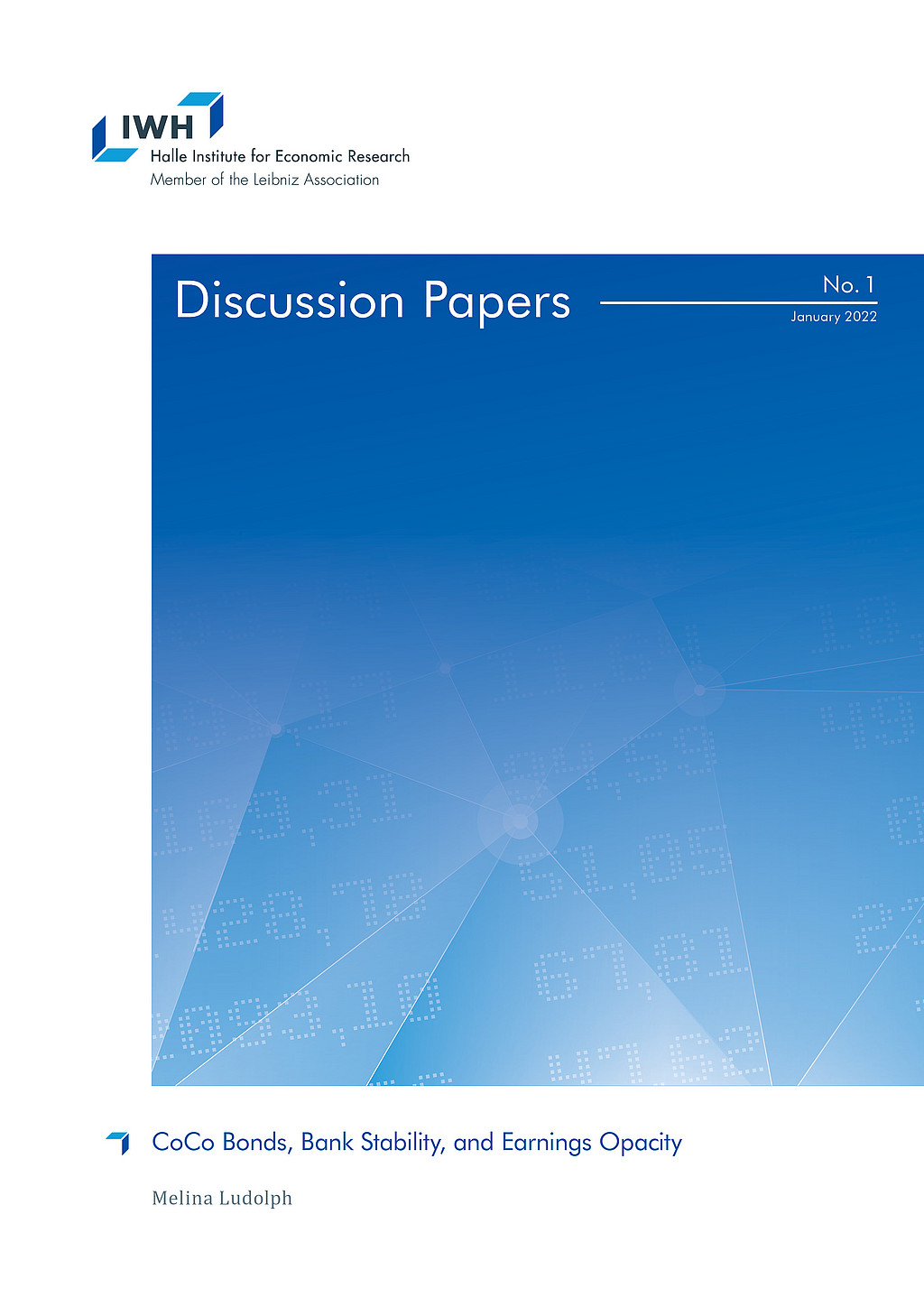
cover_DP_2022-1.jpg

CoCo Bonds, Bank Stability, and Earnings Opacity

Melina Ludolph

in: IWH Discussion Papers, Nr. 1, 2022

Abstract

This paper examines the effect of CoCo bonds that qualify as additional tier 1 capital on bank stability and reporting. The results reveal a significant reduction in the distance to insolvency following the hybrid bond issuance due to increased earnings volatility. Banks report less stable net income due to more volatile loss provisions, which increases earnings opacity rather than reflects changes in asset quality. The findings are consistent with the premise that persistent uncertainty and misconceptions among investors about bail-in likelihoods limit their monitoring engagement, which results in banks becoming less transparent.

Publikation lesen
Mitglied der Leibniz-Gemeinschaft LogoTotal-Equality-LogoGefördert durch das BMWK