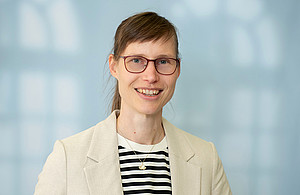
Professorin Dr. Lena Tonzer

Professorin Dr. Lena Tonzer

Aktuelle Position

seit 1/26

Forschungsprofessorin

Leibniz-Institut für Wirtschaftsforschung Halle (IWH)

seit 5/14

Leiterin der Forschungsgruppe Regulierung internationaler Finanzmärkte und Banken und der International Banking Library

Leibniz-Institut für Wirtschaftsforschung Halle (IWH)

seit 4/25

Professorin

Universität Leipzig

Forschungsschwerpunkte

  • Banken- und Staatsschuldenkrisen
  • Integration auf Finanzmärkten
  • Bankenregulierung
  • International Banking Library

Lena Tonzer ist seit Januar 2026 Forschungsprofessorin am IWH. Sie forscht zu den Themen Banken- und Staatsschuldenkrisen, Integration auf Finanzmärkten und Bankenregulierung.

Lena Tonzer ist Professorin für Money, Credit & Banking an der Universität Leipzig.

Ihr Kontakt

Professorin Dr. Lena Tonzer
- Abteilung Finanzmärkte
Nachricht senden Persönliche Seite

Publikationen

Zitationen
838

cover_journal-of-economic-behavior-and-organization.jpg

Inflation Concerns and Green Product Consumption: Evidence From a Nationwide Survey and a Framed Field Experiment

Sabrina Jeworrek Lena Tonzer

in: Journal of Economic Behavior and Organization, Vol. 248 (August), 2026

Abstract

Promoting green (usually more costly) product consumption is one essential element in building a sustainable society. In times of high inflation, not only budget constraints but also the fear that prices will continue to rise might limit the effectiveness of exerted efforts to promote sustainable behaviors. To test this suggestion, we conducted a Germany-wide survey with almost 1200 respondents, followed by a framed field experiment to confirm causality. Our proxy for green consumption is organic food purchases. Survey respondents’ stated organic purchasing behavior is positively correlated with concerns about climate change but negatively correlated with concerns about inflation. The latter result is driven by individuals with a below-median environmental attitude. In the framed field experiment, we use the priming method to manipulate the saliency of inflation concerns. Whereas sizably relaxing the budget constraint has no impact on the share of organic products in participants’ baskets, the priming significantly decreases the share of organic products for individuals with below-median environmental attitude. Using the same inflation priming in a subsequent survey experiment with around 1800 respondents, we find that high inflationary environments affect both the perception of organic being luxury products and the social norm of buying organic. Both effects are more pronounced for individuals with below-median environmental attitude and, hence, they are the likely mechanisms driving the negative effects on organic product consumption.

Publikation lesen

cover_journal-of-corporate-finance.jpg

Distributional Income Effects of Banking Regulation in Europe

Melina Ludolph Lena Tonzer Lars Brausewetter

in: Journal of Corporate Finance, Vol. 100 (July), 2026

Abstract

We study the impact of stricter and more harmonized banking regulation along the income distribution using household survey data for 25 EU countries. Exploiting country-level heterogeneity in the implementation of European Banking Union directives allows us to control for confounders and identify effects. Our results show that these regulatory reforms aimed at increasing financial system resilience affect households heterogeneously and result in a widening of the income distribution. These results are dependent on a country’s ex-ante regulatory stringency, and more pronounced in countries with stronger bank dependence. Furthermore, we find that more stringent regulation reduces income growth for low-income households primarily due to exits from employment, whereas affluent households tend to experience increased growth rates for employee and self-employed income.

Publikation lesen

cover_international-finance.jpg

A Note on the Use of Syndicated Loan Data

Isabella Müller Felix Noth Lena Tonzer

in: International Finance, Vol. 28 (3), 2025

Abstract

Syndicated loan data provided by DealScan is an essential input in banking research to answer urging questions on bank lending, e.g., in the presence of financial or geopolitical shocks or climate change. However, many data options raise the question of how to choose the estimation sample. We employ a standard regression framework analyzing bank lending during the financial crisis of 2007/08 to study how conventional but varying usages of DealScan affect the estimates. The key finding is that the direction of coefficients remains relatively robust. However, statistical significance depends on the data and sampling choice, and we provide guidelines for applied research.

Publikation lesen

Arbeitspapiere

cover_DP_2026-10.jpg

Facts or Feelings? The Role of Relatable Narratives in Shaping Inflation Expectations

Melina Ludolph Giang Nghiem Lena Tonzer

in: IWH Discussion Papers, Nr. 10, 2026

Abstract

We examine whether combining factual information on inflation levels and forecasts with a narrative can persistently shape consumers’ inflation expectations. In a preregistered randomized controlled trial with a representative sample of 3,000 German consumers, participants received either numerical or textual information about inflation rates, with or without an accompanying narrative. All treatments immediately lower inflation expectations, with numerical information eliciting stronger adjustments. Adding a narrative produces no additional immediate effect, confirming that it conveys no new information. However, only the combination of numerical information with a narrative yields a lasting reduction in inflation expectations and forecast uncertainty still observable after four weeks. Our results suggest that combining precise information with a narrative enhances information retention and can lead to more persistent shifts in consumers’ beliefs. The effects are strongest when respondents perceive the narrative as relatable and emotionally engaging, and among those with low financial literacy and limited knowledge of inflation.

Publikation lesen

Screenshot_2025-03-05_at_15-06-05_Banks__foreign_homes_-_2024-12-17-dkp-46-data.pdf.png

Banks’ foreign homes

Kirsten Schmidt Lena Tonzer

in: Deutsche Bundesbank Discussion Papers, Nr. 46, 2024

Abstract

Our results reveal that higher lending spreads between foreign and home markets redirect real estate backed lending towards foreign markets offering a higher interest rate, which provides evidence for "search for yield" behavior. This re-allocation is found especially for banks with more expertise on the foreign market due to a higher local activity and holds for commercial and residential real estate backed loans. Furthermore, "search for yield" behavior and a resulting increase in foreign real estate backed lending is found when macroprudential regulation is missing or misaligned between a bank’s country of residence and the destination country. When turning to the question of whether the detected search for yield behavior results in more risk, we find that especially better capitalized banks report higher forbearance ratios as they might face less stigma effects compared to low capitalized banks.

Publikation lesen

cover_DP_2022-24.jpg

The Effect of Firm Subsidies on Credit Markets

Aleksandr Kazakov Michael Koetter Mirko Titze Lena Tonzer

in: IWH Discussion Papers, Nr. 24, 2022

Abstract

We use project-level information for the largest regional economic development program in German history to study how government subsidies to firms affect credit markets. We identify credit market responses by considering both, bank lending and firm borrowing during 1998-2019. We find that subsidies lead to larger lending volumes without crowding out credit to non-subsidized firms. Banks that are more exposed to subsidized firms exhibit moderately higher credit risk though. Firm subsidies support lending especially when credit constraints are elevated during the years of the financial crisis.

Publikation lesen
Mitglied der Leibniz-Gemeinschaft LogoTotal-Equality-LogoGefördert durch das BMWK