
Professor Farzad Saidi, PhD

Professor Farzad Saidi, PhD
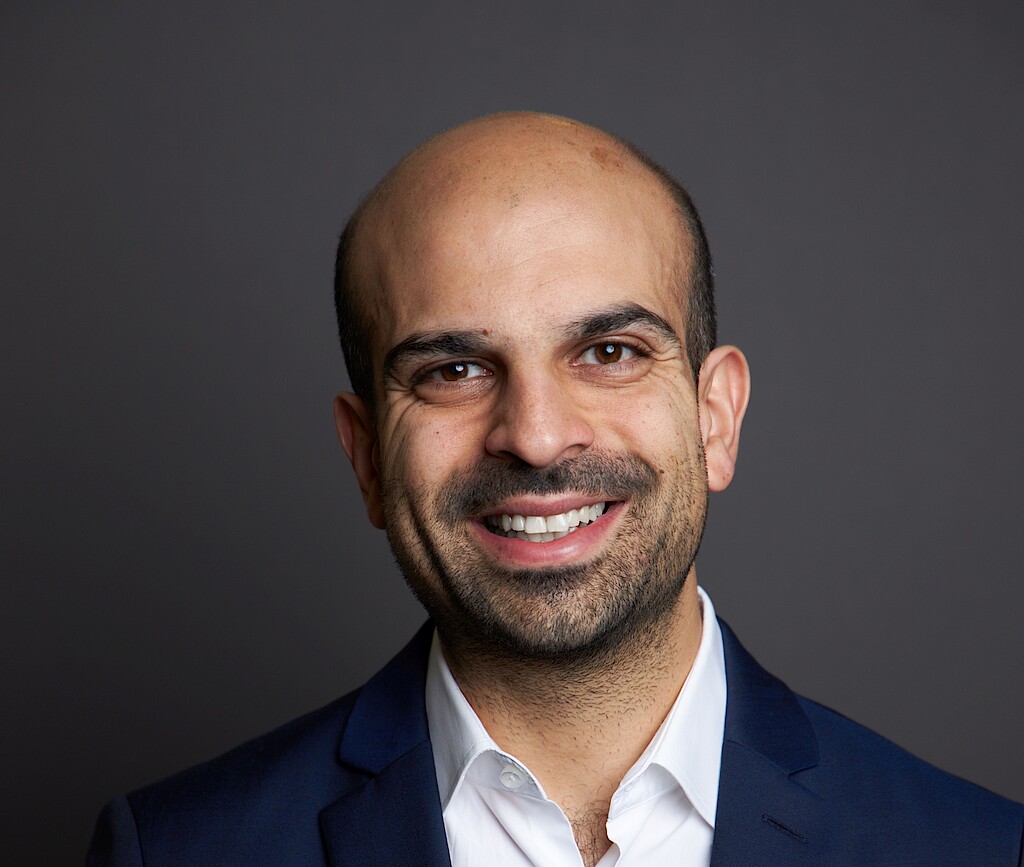
Current Position

since 4/26

Research Fellow Department of Financial Markets

Halle Institute for Economic Research (IWH) – Member of the Leibniz Association

since 1/21

Professor

University of Bonn

Research Interests

  • corporate finance
  • banking
  • monetary policy
  • financial intermediation

Farzad Saidi joined the Department Financial Markets as a Research Fellow in April 2026. His research focuses on corporate finance, financial intermediation, banking, and monetary policy.

Farzad Saidi holds the position of Professor at University of Bonn.

Your contact

Professor Farzad Saidi, PhD
- Department Financial Markets
Send Message Personal page

Publications

Citations
2457

cover_journal-of-financial-economics.png

Strategic Communication among Banks

Christian Bittner Falko Fecht Melissa Pala Farzad Saidi

in: Journal of Financial Economics, forthcoming

Abstract

Do economic incentives govern information diffusion in markets? Using international banks’ advisory activities in corporate takeovers as their source of private information, we show in supervisory data that banks with closer ties to the target, but not the acquirer, advisor trade profitably in the target’s stock prior to the deal announcement. This trading behavior is associated with a higher premium paid by the acquirer without compromising the deal success. As the incentives of informed traders are aligned only with those of the target shareholders, which are represented by the target advisor, our evidence suggests strategic information transmission among these banks.

read publication

cover_review-of-finance.jpg

Mixing QE and Interest Rate Policies at the Effective Lower Bound: Micro Evidence from the Euro Area

Christian Bittner Alexander Rodnyansky Farzad Saidi Yannick Timmer

in: Review of Finance, forthcoming

Abstract

We study the interaction of expansionary rate-based monetary policy and quantitative easing, despite their concurrent implementation, by exploiting heterogeneous banks and the introduction of negative monetary-policy rates in a fragmented euro area. Quantitative easing increases credit supply less, translating into weaker employment growth, when banks’ funding costs do not decrease. Using administrative data from Germany, we uncover that among banks selling their securities, central-bank reserves remain disproportionately with high-deposit banks that are constrained due to sticky customer deposits at the zero lower bound. Affected German banks lend relatively less to firms while increasing their interbank exposure in the euro area.

read publication

cover_european-economic-review.jpg

Altruism, Social Interactions, and the Course of a Pandemic

Laura Alfaro Ester Faia Nora Lamersdorf Farzad Saidi

in: European Economic Review, Vol. 161 (1), 2024

Abstract

Externalities and social preferences, such as altruism, play a key role in the choice of social interactions, which in turn affect the diffusion of a pandemic. We build a dynamic epidemiological model with endogenous social interactions in a frictional environment, also in a variant with heterogeneous agents and a network structure. Taking into account agents’ endogenous behavior and altruism generates markedly different predictions relative to a naïve epidemiological model with exogenous contact rates. Congestion and commitment inefficiencies arise, even under full altruism, and call for policy intervention. We derive the efficient allocation, and show how the Ramsey planner can mitigate the respective externalities.

read publication
Mitglied der Leibniz-Gemeinschaft LogoTotal-Equality-LogoSupported by the BMWK

