Professor Ofer Eldar, PhD

Professor Ofer Eldar, PhD

Current Position

since 7/26

Senior Research Professor

Halle Institute for Economic Research (IWH) – Member of the Leibniz Association

since 7/23

Professor of Law

UC Berkeley School of Law

Research Interests

  • corporate governance
  • venture capital
  • entrepreneurship
  • law and finance

Ofer Eldar joined the institute as a Senior Research Professor in July 2026. His research focuses on corporate governance, venture capital and entrepreneurship, and law and finance.

Ofer Eldar is a Professor at UC Berkeley School of Law and a Professor (by courtesy) in the Finance Group at UC Berkeley Haas School of Business. He received his PhD in financial economics from Yale University.

Your contact

Professor Ofer Eldar, PhD
- Department Laws, Regulations and Factor Markets
Send Message Personal page

Publications

Citations
996

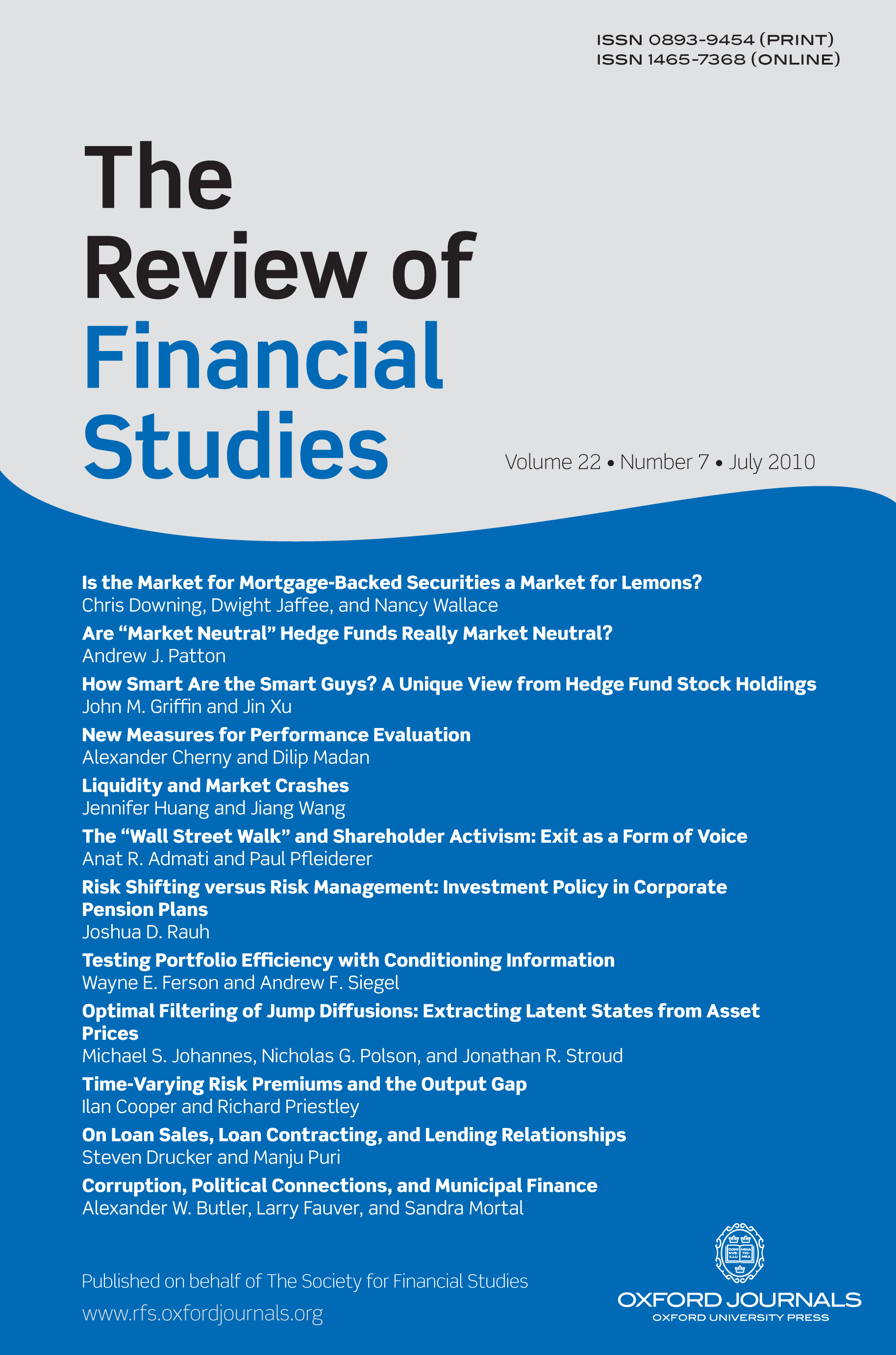
cover_review-of-financial-studies.png

Common Venture Capital Investors and Startup Growth

Ofer Eldar Jillian Grennan

in: Review of Financial Studies, Vol. 37 (2), 2024

Abstract

We exploit the staggered introduction of liability waivers when investors hold stakes in conflicting business opportunities as a shock to venture capital (VC) investment and director networks. After the law changes, we find increases in within-industry VC investment and common directors serving on startup boards. Despite the potential for rent extraction, same-industry startups inside VC portfolios benefit by raising more capital, failing less, and exiting more successfully. VC directors serving on other startup boards are the primary mechanism associated with positive outcomes, consistent with common VC investment facilitating informational exchanges in VC portfolios.

read publication

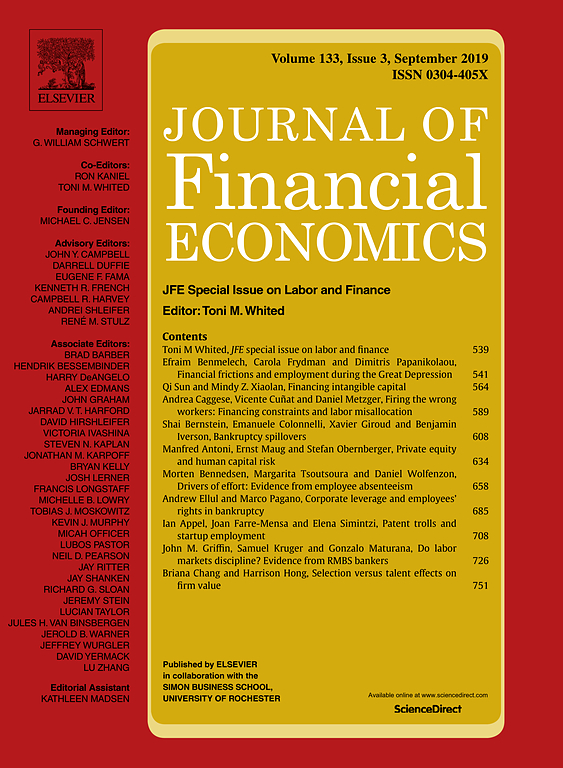
cover_journal-of-financial-economics.png

The Rise of Dual-Class Stock IPOs

Dhruv Aggarwal Ofer Eldar Yael V. Hochberg Lubomir P. Litov

in: Journal of Financial Economics, Vol. 144 (1), 2022

Abstract

We create a novel dataset to examine the recent rise in dual-class IPOs. We document that dual-class firms have different types of controlling shareholders and wedges between voting and economic rights, and that the increasing popularity of dual-class structures is driven by founder-controlled firms. We find that founders’ wedge is greater when founders have stronger bargaining power. The increase in founder control over time is due to greater availability of private capital and technological shocks that reduced firms’ needs for external financing. Stronger bargaining power is also associated with a lower likelihood of sunset provisions that terminate dual-class structures.

read publication

cover_american-economic-journal-microeconomics.jpeg

Regulatory Competition and the Market for Corporate Law

Ofer Eldar Lorenzo Magnolfi

in: American Economic Journal: Microeconomics, Vol. 12 (2), 2020

Abstract

This article develops an empirical model of firms' choice of corporate laws under inertia. Delaware dominates the incorporation market, though recently Nevada, a state whose laws are highly protective of managers, has acquired a sizable market share. Using a database of firm incorporation decisions from 1995 to 2013, we show that most firms dislike protectionist laws, such as anti-takeover statutes and liability protections for officers, and that Nevada's rise is due to the preferences of small firms. Consistent with the bonding hypothesis, our estimates indicate that despite inertia, Delaware would lose significant market share and revenues if it adopted protectionist laws.

read publication

Working Papers

cover_finance-working-paper_869.png

The Rise of Anti-Activist Poison Pills

Ofer Eldar Tanja Kirmse Michael D. Wittry

in: Finance Working Paper, No. 869, 2023

Abstract

We examine the contractual evolution of poison pill design, focusing on lower ownership triggers, acting-in-concert provisions, and synthetic equity clauses that tailor pills to defend against shareholder activism. Using novel data on hedge funds' access to SEC filings as a proxy for intervention threats, we find that firms facing heightened activist threats are more likely to adopt anti-activist pills. Relative to comparable firms under activist scrutiny, pill adopters experience fewer subsequent activist interventions and are less likely to pursue activist-favored policies, such as reduced investment and increased buybacks. These findings contribute to policy debates over defensive measures against activist interventions.

read publication
Mitglied der Leibniz-Gemeinschaft LogoTotal-Equality-LogoSupported by the BMWK