
Green Transition
Research and Policy Advice for Structural Change in the German Economy
Dossier, 18.06.2024

Green Transition
The green transition is a key topic of our time. In a broader sense, it describes the comprehensive change in the German and European economy towards a more sustainable, environmentally friendly and future-proof way of doing business. In a narrower sense, the green transition is understood as a process of generating energy in an increasingly greenhouse gas-neutral way.
This transition is undisputed. It is necessary to combat climate change and offers immense opportunities for innovation, growth and the creation of new jobs in Germany – provided it is strategically planned and implemented correctly.
What is the Green Transition About?
At its core, the green transition is about replacing fossil fuels with renewable energy, increasing energy efficiency and establishing a circular economy.
The green transition requires considerable investment in new technologies and infrastructure as well as adjustments to legislation and regulation. Firms need to change their production processes, develop new business models, and offer sustainable products and services.
On the one hand, economic research and policy advice support areas that are negatively affected by the green transition, such as the German coal-mining regions, which are receiving funding for structural changes. On the other hand, economic research focuses on economic sectors that are growing, such as digitalisation and robotics.
The Role of the Halle Institute in the Green Transition
This structural change affects all areas of the economy, from industry and the service sector to agriculture. Energy-intensive sectors in particular face the challenge of drastically reducing their emissions while remaining competitive.
This structural change requires innovative approaches and close cooperation between business, science and politics. The Halle Institute for Economic Research (IWH) is facing this challenge and is positioning itself at this interface with its research and policy advice.
Among other things, the researchers at the Institute analyse the economic impact of the green transition, evaluate the effectiveness of political measures, and provide important findings for the design of funding programmes and regulations. Through well-founded analyses and forecasts, they contribute to mastering the challenges of structural change and making the best use of its potential.
All of this takes place within a European and international framework: Through networked research projects, conference participation, and the exchange of visiting academics, the Halle Institute's research and policy advice are at the cutting edge. They are linked to other key topics at the institute, including research on business cycles, financial stability, productivity, and demographics.
The European Dimension of the Green Transition
The green transition offers an opportunity to successfully position Germany as a leader in sustainability and innovation. By developing and exporting green technologies and solutions, the German economy can benefit not only ecologically but also economically.
For this to succeed, however, Germany must avoid taking a unique economic path and instead proceed in a coordinated manner across Europe, as it does in other areas. The Halle Institute also advocates market-based instruments to support this process.
According to the Halle Institute, the European Union (EU) is the key driver of the green transition, along with price incentives. In order to increase public acceptance, CO2 reductions should take place where it is most cost-effective within the EU.
In a strategy paper published on 18 June 2024, entitled “Six Points for an Efficient Green Transition” ("Sechs Punkte für eine effiziente grüne Transformation"), Reint Gropp and Oliver Holtemöller, President and Vice President of the Halle Institute, therefore state that energy production and consumption should not be regulated in a piecemeal manner. Instead, the authors recommend a set of coordinated points for the green transition that are only effective as a package.
Reint Gropp and Oliver Holtemöller: "Ein Plan zur grünen Transformation" (guest article)
in: Frankfurter Allgemeine Zeitung, 17.06.2024
Oliver Holtemöller: "BASF kehrt Deutschland den Rücken? Ökonomen fordern Reaktion der Ampelregierung"
in: Berliner Zeitung, 31.05.2024
Oliver Holtemöller: "Die Spur der Kohlemilliarden": MDR-Langfristprojekt verfolgt in Echtzeit, wohin Investitionen fließen
in: Mitteldeutscher Rundfunk, 30.11.2023
Oliver Holtemöller: "Wohin fließen die Kohlemilliarden?"
in: Mitteldeutscher Rundfunk, 28.11.2023
IWH: "Von Aktivismus bis zur Kohle: Vielfältiges MDR-Programm zur Weltklimakonferenz 2023 Hauptinhalt"
in: Mitteldeutscher Rundfunk, 24.11.2023
Oliver Holtemöller: "Wirksamkeit der Strukturförderung: Wohin gehen die 'Kohlemilliarden'?" (podcast interview)
in: revierwende.de, 15.11.2023
IWH: "Wie weit ist der Strukturwandel in Deutschlands Kohlerevieren?"
in: rbb Rundfunk Berlin-Brandenburg, 09.11.2023
Oliver Holtemöller: "IWH-Bericht über Verwendung von Milliarden aus dem Kohleausstieg" (Min. 14:00)
in: ARD tagesschau, 18.08.2023
IWH: "Bund stellt Milliardenhilfen für Kohle-Regionen zur Verfügung, doch die werden kaum genutzt"
in: TAG24.de, 17.08.2023
IWH: "Kohleausstieg: Fördermittel nur zu «kleinem Teil» abgerufen"
in: FAZ.net, 16.08.2023
IWH: "Kohleausstieg: Fördermittel nur zu "kleinem Teil" abgerufen"
in: Zeit Online, 16.08.2023
IWH: "Gutachten zu Kohlemilliarden: Mehr Mittel in Verfügbarkeit von Arbeitskräften lenken"
in: Sächsische.de, 16.08.2023
Oliver Holtemöller: "Kohleausstieg - Ein gerettetes Dorf will eine Zukunft" (Min. 11:44)
in: Bundeszentrale für politische Bildung, 06.06.2023
IWH: "IWH startet Studie zur Wirkung der "Kohlemilliarden"
in: Zeit Online, 15.12.2022
Steffen Müller: "Was passiert mit Deutschlands Industrie bei einem Gasmangel?"
in: Spiegel Online, 12.11.2022
Reint Gropp: "Strukturhilfen für Braunkohleregionen: Notwendiger Umbau"
in: taz.de, 07.10.2022
Oliver Holtemöller: "IWH-Studie zum Kohleausstieg: Ohne Abwanderung von Arbeitskräften wird der Strukturwandel nicht vonstattengehen"
in: Leipziger Internet Zeitung, 18.08.2022
Media Cooperation
The “Coal Update” (Das Kohleupdate)
Forty billion euros of taxpayers' money will be invested in Germany's lignite mining regions by 2038. Who will benefit from this funding? And will the investment pay off?
The Halle Institute's expert advice as part of the project "The trail of Coal Billions" (Die Spur der Kohlemilliarden”) by Mitteldeutscher Rundfunk (MDR) and Hoferichter & Jacobs GmbH.
Selected Publications

Carbon Transition Risk and Corporate Loan Securitization
in: Journal of Financial Intermediation, July 2025
Abstract
We examine how banks manage carbon transition risk by selling loans given to polluting borrowers to less regulated shadow banks in securitization markets. Exploiting the election of Donald Trump as an exogenous shock that reduces carbon risk, we find that banks’ securitization decisions are sensitive to borrowers’ carbon footprints. Banks are more likely to securitize brown loans when carbon risk is high but swiftly change to keep these loans on their balance sheets when carbon risk is reduced after Trump’s election. Importantly, securitization enables banks to offer lower interest rates to polluting borrowers but does not affect the supply of green loans. Our findings are more pronounced among domestic banks and banks that do not display green lending preferences. We discuss how securitization can weaken the effectiveness of bank climate policies through reducing banks’ incentives to price carbon risk.
Robot Adoption at German Plants
in: Jahrbücher für Nationalökonomie und Statistik, No. 3, 2024
Abstract
Using a newly collected dataset at the plant level from 2014 to 2018, we provide the first microscopic portrait of robotization in Germany and study the correlates of robot adoption. Our descriptive analysis uncovers five stylized facts: (1) Robot use is relatively rare. (2) The distribution of robots is highly skewed. (3) New robot adopters contribute substantially to the recent robotization. (4) Robot users are exceptional. (5) Heterogeneity in robot types matters. Our regression results further suggest plant size, high-skilled labor share, exporter status, and labor shortage to be strongly associated with the future probability of robot adoption.
Sechs Punkte für eine effiziente grüne Transformation
in: IWH Policy Notes, No. 2, 2024
Abstract
<p>Die grüne Transformation, verstanden als ein Prozess, Energie zunehmend treibhausgasneutral zu erzeugen, kann mit marktwirtschaftlichen Instrumenten und dafür erforderlichen Rahmenbedingungen kostengünstiger umgesetzt werden als mit staatlicher Steuerung des Energieverbrauchs und der Energieerzeugung. Kosteneffizienz ist von entscheidender Bedeutung für die Bereitschaft und Fähigkeit der Bevölkerung, die Lasten der Transformation zu tragen, und für eine gerechte Verteilung der Lasten.</p>

A Belowground Perspective on the Nexus between Biodiversity Change, Climate Change, and Human Well-being
in: Journal of Sustainable Agriculture and Environment, No. 2, 2024
Abstract
<p>Soil is central to the complex interplay among biodiversity, climate, and society. This paper examines the interconnectedness of soil biodiversity, climate change, and societal impacts, emphasizing the urgent need for integrated solutions. Human-induced biodiversity loss and climate change intensify environmental degradation, threatening human well-being. Soils, rich in biodiversity and vital for ecosystem function regulation, are highly vulnerable to these pressures, affecting nutrient cycling, soil fertility, and resilience. Soil also crucially regulates climate, influencing energy, water cycles, and carbon storage. Yet, climate change poses significant challenges to soil health and carbon dynamics, amplifying global warming. Integrated approaches are essential, including sustainable land management, policy interventions, technological innovations, and societal engagement. Practices like agroforestry and organic farming improve soil health and mitigate climate impacts. Effective policies and governance are crucial for promoting sustainable practices and soil conservation. Recent technologies aid in monitoring soil biodiversity and implementing sustainable land management. Societal engagement, through education and collective action, is vital for environmental stewardship. By prioritizing interdisciplinary research and addressing key frontiers, scientists can advance understanding of the soil biodiversity–climate change–society nexus, informing strategies for environmental sustainability and social equity.</p>

Too Poor to Be Green? The Effects of Wealth on the Residential Heating Transformation
in: SSRN Working Paper, 2024
Abstract
Using the near-universe of Danish owner-occupied residential houses, we show that an exogenous increase in wealth significantly increases the likelihood to switch to green heating. We estimate an elasticity of one at the median of the wealth distribution, i.e., a 10% increase in wealth increase raises green heating adoption by 10%. Effects are heterogeneous along the wealth distribution: all else equal, a redistribution of wealth from rich households to poor households can significantly increase green heating adoption. We further explore potential channels of our findings (pro-social preferences, financial constraints, and luxury goods interpretation). Our results emphasize the role of economic growth for the green transition.
Inflation Concerns and Green Product Consumption: Evidence from a Nationwide Survey and a Framed Field Experiment
in: IWH Discussion Papers, No. 10, 2024
Abstract
Promoting green product consumption is one important element in building a sustainable society. Yet green products are usually more costly. In times of high inflation, not only budget constraints but also the fear that prices will continue to rise might dampen green product consumption and, hence, limit the effectiveness of exerted efforts to promote sustainable behaviors. To test this suggestion, we conducted a Germany-wide survey with almost 1,200 respondents, followed by a framed field experiment (N=500) to confirm causality. In the survey, respondents’ stated “green” purchasing behavior is, as to be expected, positively correlated with concerns about climate change. It is also negatively correlated with concerns about future inflation and energy costs, but after controlling for observable characteristics such as income and educational level only the correlation with concerns about future prices remains significant. This result is driven by individuals with below-median environmental attitude. In the framed field experiment, we use the priming method to manipulate the saliency of inflation concerns. Whereas sizably relaxing the budget constraint (i.e., by 50 percent) has no impact on the share of organic products in participants’ baskets, the priming significantly decreases the share of organic products for individuals with below-median environmental attitude, similar to the survey data.
Climate Stress Tests, Bank Lending, and the Transition to the Carbon-neutral Economy
in: IWH Discussion Papers, No. 9, 2024
Abstract
We ask if bank supervisors’ efforts to combat climate change affect banks’ lending and their borrowers’ transition to the carbon-neutral economy. Combining information from the French supervisory agency’s climate pilot exercise with borrowers’ emission data, we first show that banks that participate in the exercise increase lending to high-carbon emitters but simultaneously charge higher interest rates. Second, participating banks collect new information about climate risks, and boost lending for green purposes. Third, receiving credit from a participating bank facilitates borrowers’ efforts to improve environmental performance. Our findings establish a hitherto undocumented link between banking supervision and the transition to net-zero.
Out of Sight, out of Mind: Divestments and the Global Reallocation of Pollutive Assets
in: SSRN Working Papers, 2023
Abstract
Large emitters reduced their carbon emissions by around 11-15% after the 2015 Paris Agreement (“the Agreement”) relative to public firms that are less in the limelight. We show that this effect is predominantly driven by divestments. Large emitters are 9 p.p. more likely to divest pollutive assets in the post-Agreement period, an increase of over 75%. This divestment effect comes from asset sales and not from closures of pollutive facilities. There is no evidence for increased engagements in other emission reduction activities. Our results indicate significant global asset reallocation effects after the Agreement, shifting emissions out of the limelight.
Micro Data on Robots from the IAB Establishment Panel
in: Jahrbücher für Nationalökonomie und Statistik, No. 3, 2023
Abstract
Micro-data on robots have been very sparse in Germany so far. Consequently, a dedicated section has been introduced in the IAB Establishment Panel 2019 that includes questions on the number and type of robots used. This article describes the background and development of the survey questions, provides information on the quality of the data, possible checks and steps of data preparation. The resulting data is aggregated on industry level and compared with the frequently used robot data by the International Federation of Robotics (IFR) which contains robot supplier information on aggregate robot stocks and deliveries.
Robots and Female Employment in German Manufacturing
in: American Economic Association Papers and Proceedings, May 2023
Abstract
We analyze the impact of robot adoption on female employment. Our analysis is based on novel micro data on robot use by German manufacturing establishments linked with social security records. An event study analysis for robot adoption shows increased churning among female workers. Whereas hiring rises significantly at robot adoption, separations increase with a smaller magnitude one year later. Overall, employment effects are modestly positive and strongest for medium-qualified women. We find no adverse employment effects for female workers in any of our broad qualification groups.
Carbon Transition Risk and Corporate Loan Securitization
in: Journal of Financial Intermediation, July 2025
Abstract
We examine how banks manage carbon transition risk by selling loans given to polluting borrowers to less regulated shadow banks in securitization markets. Exploiting the election of Donald Trump as an exogenous shock that reduces carbon risk, we find that banks’ securitization decisions are sensitive to borrowers’ carbon footprints. Banks are more likely to securitize brown loans when carbon risk is high but swiftly change to keep these loans on their balance sheets when carbon risk is reduced after Trump’s election. Importantly, securitization enables banks to offer lower interest rates to polluting borrowers but does not affect the supply of green loans. Our findings are more pronounced among domestic banks and banks that do not display green lending preferences. We discuss how securitization can weaken the effectiveness of bank climate policies through reducing banks’ incentives to price carbon risk.
Robot Adoption at German Plants
in: Jahrbücher für Nationalökonomie und Statistik, No. 3, 2024
Abstract
Using a newly collected dataset at the plant level from 2014 to 2018, we provide the first microscopic portrait of robotization in Germany and study the correlates of robot adoption. Our descriptive analysis uncovers five stylized facts: (1) Robot use is relatively rare. (2) The distribution of robots is highly skewed. (3) New robot adopters contribute substantially to the recent robotization. (4) Robot users are exceptional. (5) Heterogeneity in robot types matters. Our regression results further suggest plant size, high-skilled labor share, exporter status, and labor shortage to be strongly associated with the future probability of robot adoption.
Sechs Punkte für eine effiziente grüne Transformation
in: IWH Policy Notes, No. 2, 2024
Abstract
<p>Die grüne Transformation, verstanden als ein Prozess, Energie zunehmend treibhausgasneutral zu erzeugen, kann mit marktwirtschaftlichen Instrumenten und dafür erforderlichen Rahmenbedingungen kostengünstiger umgesetzt werden als mit staatlicher Steuerung des Energieverbrauchs und der Energieerzeugung. Kosteneffizienz ist von entscheidender Bedeutung für die Bereitschaft und Fähigkeit der Bevölkerung, die Lasten der Transformation zu tragen, und für eine gerechte Verteilung der Lasten.</p>
A Belowground Perspective on the Nexus between Biodiversity Change, Climate Change, and Human Well-being
in: Journal of Sustainable Agriculture and Environment, No. 2, 2024
Abstract
<p>Soil is central to the complex interplay among biodiversity, climate, and society. This paper examines the interconnectedness of soil biodiversity, climate change, and societal impacts, emphasizing the urgent need for integrated solutions. Human-induced biodiversity loss and climate change intensify environmental degradation, threatening human well-being. Soils, rich in biodiversity and vital for ecosystem function regulation, are highly vulnerable to these pressures, affecting nutrient cycling, soil fertility, and resilience. Soil also crucially regulates climate, influencing energy, water cycles, and carbon storage. Yet, climate change poses significant challenges to soil health and carbon dynamics, amplifying global warming. Integrated approaches are essential, including sustainable land management, policy interventions, technological innovations, and societal engagement. Practices like agroforestry and organic farming improve soil health and mitigate climate impacts. Effective policies and governance are crucial for promoting sustainable practices and soil conservation. Recent technologies aid in monitoring soil biodiversity and implementing sustainable land management. Societal engagement, through education and collective action, is vital for environmental stewardship. By prioritizing interdisciplinary research and addressing key frontiers, scientists can advance understanding of the soil biodiversity–climate change–society nexus, informing strategies for environmental sustainability and social equity.</p>
Too Poor to Be Green? The Effects of Wealth on the Residential Heating Transformation
in: SSRN Working Paper, 2024
Abstract
Using the near-universe of Danish owner-occupied residential houses, we show that an exogenous increase in wealth significantly increases the likelihood to switch to green heating. We estimate an elasticity of one at the median of the wealth distribution, i.e., a 10% increase in wealth increase raises green heating adoption by 10%. Effects are heterogeneous along the wealth distribution: all else equal, a redistribution of wealth from rich households to poor households can significantly increase green heating adoption. We further explore potential channels of our findings (pro-social preferences, financial constraints, and luxury goods interpretation). Our results emphasize the role of economic growth for the green transition.
Inflation Concerns and Green Product Consumption: Evidence from a Nationwide Survey and a Framed Field Experiment
in: IWH Discussion Papers, No. 10, 2024
Abstract
Promoting green product consumption is one important element in building a sustainable society. Yet green products are usually more costly. In times of high inflation, not only budget constraints but also the fear that prices will continue to rise might dampen green product consumption and, hence, limit the effectiveness of exerted efforts to promote sustainable behaviors. To test this suggestion, we conducted a Germany-wide survey with almost 1,200 respondents, followed by a framed field experiment (N=500) to confirm causality. In the survey, respondents’ stated “green” purchasing behavior is, as to be expected, positively correlated with concerns about climate change. It is also negatively correlated with concerns about future inflation and energy costs, but after controlling for observable characteristics such as income and educational level only the correlation with concerns about future prices remains significant. This result is driven by individuals with below-median environmental attitude. In the framed field experiment, we use the priming method to manipulate the saliency of inflation concerns. Whereas sizably relaxing the budget constraint (i.e., by 50 percent) has no impact on the share of organic products in participants’ baskets, the priming significantly decreases the share of organic products for individuals with below-median environmental attitude, similar to the survey data.
Climate Stress Tests, Bank Lending, and the Transition to the Carbon-neutral Economy
in: IWH Discussion Papers, No. 9, 2024
Abstract
We ask if bank supervisors’ efforts to combat climate change affect banks’ lending and their borrowers’ transition to the carbon-neutral economy. Combining information from the French supervisory agency’s climate pilot exercise with borrowers’ emission data, we first show that banks that participate in the exercise increase lending to high-carbon emitters but simultaneously charge higher interest rates. Second, participating banks collect new information about climate risks, and boost lending for green purposes. Third, receiving credit from a participating bank facilitates borrowers’ efforts to improve environmental performance. Our findings establish a hitherto undocumented link between banking supervision and the transition to net-zero.
Out of Sight, out of Mind: Divestments and the Global Reallocation of Pollutive Assets
in: SSRN Working Papers, 2023
Abstract
Large emitters reduced their carbon emissions by around 11-15% after the 2015 Paris Agreement (“the Agreement”) relative to public firms that are less in the limelight. We show that this effect is predominantly driven by divestments. Large emitters are 9 p.p. more likely to divest pollutive assets in the post-Agreement period, an increase of over 75%. This divestment effect comes from asset sales and not from closures of pollutive facilities. There is no evidence for increased engagements in other emission reduction activities. Our results indicate significant global asset reallocation effects after the Agreement, shifting emissions out of the limelight.
Micro Data on Robots from the IAB Establishment Panel
in: Jahrbücher für Nationalökonomie und Statistik, No. 3, 2023
Abstract
Micro-data on robots have been very sparse in Germany so far. Consequently, a dedicated section has been introduced in the IAB Establishment Panel 2019 that includes questions on the number and type of robots used. This article describes the background and development of the survey questions, provides information on the quality of the data, possible checks and steps of data preparation. The resulting data is aggregated on industry level and compared with the frequently used robot data by the International Federation of Robotics (IFR) which contains robot supplier information on aggregate robot stocks and deliveries.
Robots and Female Employment in German Manufacturing
in: American Economic Association Papers and Proceedings, May 2023
Abstract
We analyze the impact of robot adoption on female employment. Our analysis is based on novel micro data on robot use by German manufacturing establishments linked with social security records. An event study analysis for robot adoption shows increased churning among female workers. Whereas hiring rises significantly at robot adoption, separations increase with a smaller magnitude one year later. Overall, employment effects are modestly positive and strongest for medium-qualified women. We find no adverse employment effects for female workers in any of our broad qualification groups.
Events
In addition to research and reporting, the Halle Institute organises events that foster dialogue between politics, business and research. The focus is on topics such as rising energy prices, the restructuring of the German economy, and Germany's role in the European Green Deal.
- Rising Energy Prices - How Can the Transition of the German Economy Succeed? (Steigende Energiepreise – Wie kann der Umbau der deutschen Wirtschaft gelingen?)
- Europa-Debatte: Climate-neutral by 2050? Germany's Role in the European Green Deal (Europa-Debatte: Klimaneutral bis 2050? Deutschlands Rolle im Europäischen Green Deal)
- Structural Change in the Lignite Mining Areas (Strukturwandel in den Braunkohlerevieren)
- A CO2-neutral Future: How Can it Work? (Eine CO2-neutrale Zukunft: Wie kann das funktionieren?)
- Financial Regulation - Going Green 2024
Projects
Various projects have been and are being realised at the Halle Institute that deal with issues of green transition. These include:
- DFG application for the Cluster of Excellence "Breathing Nature" (Atmende Natur: Wechselwirkungen zwischen Biodiversität, Klima und menschlichem Verhalten)
- OVERHANG: Debt Overhang and Green Investments – the Role of Banks in the Climate-friendly Management of Emission-intensive Assets (OVERHANG: Schuldenüberhang und grüne Investitionen – die Rolle von Banken für den klimafreundlichen Umgang mit emissionsintensiven Anlagenvermögen)
- Evaluation of the InvKG and the federal programme STARK (Evaluierung des InvKG und des Bundesprogrammes STARK)
- ENTRANCES: Energy Transitions from Coal and Carbon: Effects on Societies
Our experts

President
If you have any further questions please contact me.
+49 345 7753-700 Request per E-Mail
Vice President Department Head
If you have any further questions please contact me.
+49 345 7753-800 Request per E-Mail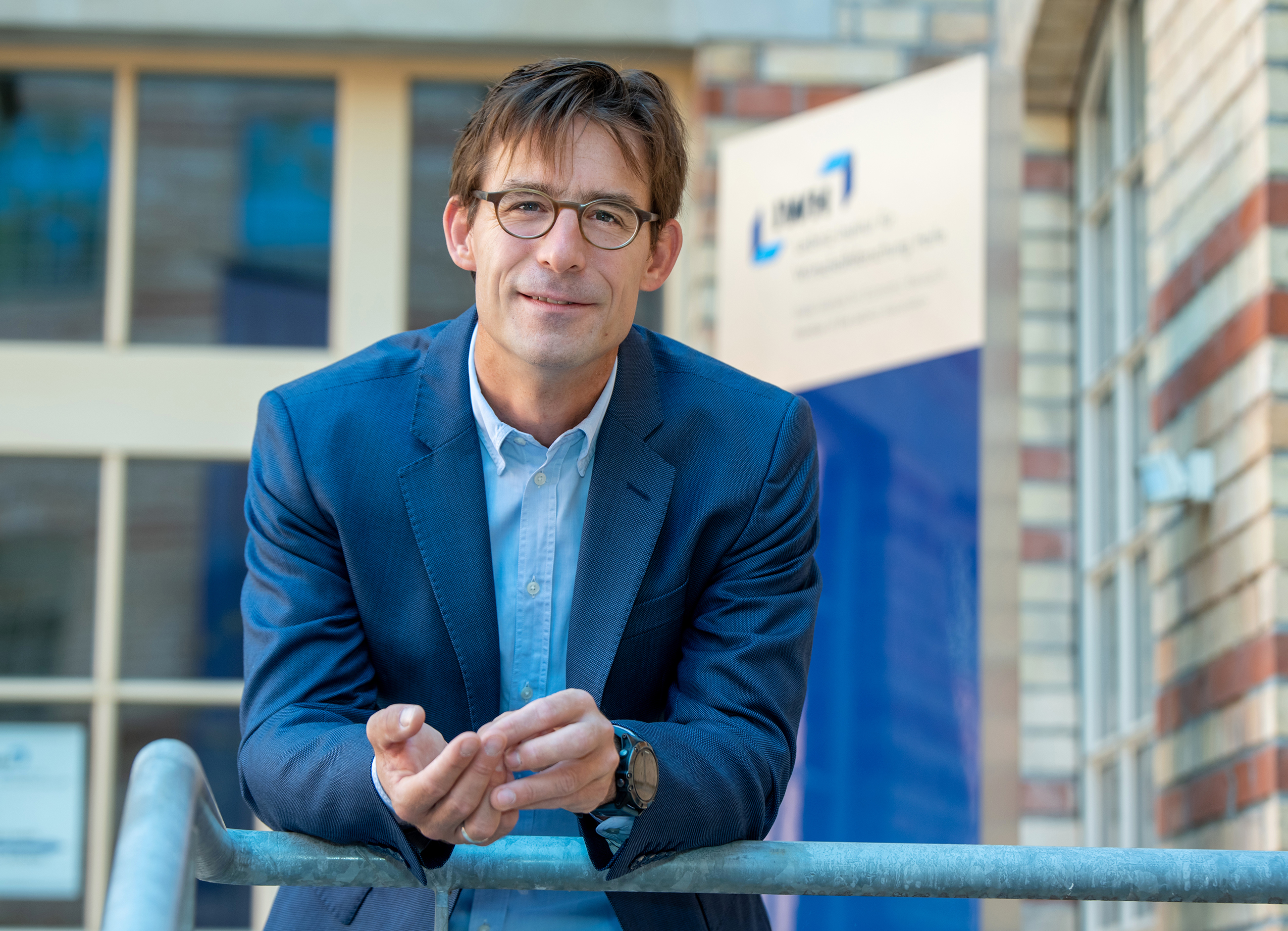
Vice President Department Head
If you have any further questions please contact me.
+49 345 7753-727 Request per E-MailAll experts, press releases, publications and events on "Green transition"
Publications on "Green transition"
Begleitende Evaluierung des Investitionsgesetzes Kohleregionen (InvKG) und des STARK-Bundesprogramms. Endbericht zur Auftragserweiterung
in: IWH Studies, No. 5, 2023
Abstract
<b>Gutachten im Auftrag des Bundesministeriums für Wirtschaft und Klimaschutz </b><br /><br />Das vorliegende Kurzgutachten befasst sich mit der Analyse des aktuellen Standes der Maßnahmen des StStG. Ausgangspunkt für die Analysen stellt eine Auswertung der aktuellen Literatur zum Strukturwandel in den deutschen Kohlerevieren dar. Dieser Literaturüberblick zeigt, dass die Förderregionen im Geltungsbereich des StStG sehr unterschiedliche Voraussetzungen für eine erfolgreiche Bewältigung des Strukturwandels aufweisen. Dennoch sollten die Maßnahmen in allen Regionen an den wichtigen Determinanten des Wirtschaftswachstums ansetzen, wobei sie auf die Gegebenheiten der Regionen abgestimmt sein sollten. Dabei sind vor allem Investitionen als zentraler Bestimmungsfaktor für die langfristige wirtschaftliche Leistungsfähigkeit anzusehen. Diese setzen sich aus privaten Investitionen in Sachkapital, Ausgaben für Forschung und Entwicklung mit dem Ziel des technologischen Fortschritts, Ausgaben für Bildung zur Erhöhung des Humankapitals sowie Investitionen in den öffentlichen Kapitalstock, etwa die Verkehrsinfrastruktur, zusammen. Dabei werden langfristig Bildung und Forschung und Entwicklung als wichtigste Wachstumstreiber angesehen, an denen die Förderung des Strukturwandels entsprechend ansetzen sollte. Auch sollte das Augenmerk auf die Diffusion und den Transfer von Wissen und Technologien gerichtet sein. Kritische Anmerkungen weisen in die Richtung, dass vor allem Infrastrukturprojekte Unterstützung durch StStG-Mittel erhalten, die ohnehin durchgeführt worden wären und dass die Kommunen die StStG-Mittel als Erweiterung ihrer Haushaltsspielräume betrachten.
Begleitende Evaluierung des Investitionsgesetzes Kohleregionen (InvKG) und des STARK-Bundesprogramms. Zwischenbericht vom 30.06.2023
in: IWH Studies, No. 6, 2023
Abstract
<b>Gutachten im Auftrag des Bundesministeriums für Wirtschaft und Klimaschutz </b><br /><br />Das Klimaschutzgesetz (KSG) sieht eine Reduktion der deutschen Treibhausgasemissionen bis zum Jahr 2030 um 65 Prozent gegenüber den Emissionen im Jahr 1990 vor. Der Ausstieg aus der thermischen Verwertung der Kohle (vor allem der Braunkohle) leistet einen substanziellen Beitrag zum Erreichen dieser Ziele. Der Kohleausstieg stellt die Braunkohlereviere (und die Standorte der Steinkohlekraftwerke) jedoch vor strukturpolitische Herausforderungen. Um den Strukturwandel in diesen Regionen aktiv zu gestalten, hat der Bundestag im August 2020 mit Zustimmung des Bundesrats das Strukturstärkungsgesetz Kohleregionen (StStG) beschlossen. Über dieses Gesetz stellt der Bund bis zum Jahr 2038 Finanzhilfen von 41,09 Mrd. Euro zur Verfügung. Im Fokus der Politikmaßnahmen stehen verschiedene Ziele, vor allem gesamtwirtschaftliche (Wertschöpfung, Wachstum, Steueraufkommen), wettbewerbliche (Produktivität), arbeitsmarktpolitische (Beschäftigung, Beschäftigungsstrukturen), verteilungspolitische (regionale Disparitäten) sowie klimapolitische (Treibhausgasreduzierung, Nachhaltigkeit). Die im StStG vorgesehenen strukturpolitischen Interventionen umfassen ein breites Maßnahmenbündel. Das Gesetz regelt auch die Berichtspflichten der Bundesregierung gegenüber Bundestag und Bundesrat. Diese beinhalten insbesondere die wissenschaftliche Evaluierung des Gesetzes in einem zweijährigen Zyklus. Bei dem vorliegenden Bericht handelt es sich um das erste Dokument in dieser Reihe. Der aktuelle Bericht fokussiert sich dabei insbesondere auf die im Rahmen des Investitionsgesetzes Kohleregionen (InvKG) und des STARK-Bundesprogramms geplanten Maßnahmen sowie die vorläufige Bewertung ihrer möglichen Effekte. Angesichts des Programmstarts im Jahr 2020 und einer fast zwanzigjährigen Laufzeit des Programms kann der Bericht allenfalls einen ersten Zwischenstand wiedergeben. Viele Maßnahmen haben noch nicht oder gerade erst begonnen. Die hier vorgelegten empirischen Analysen basieren auf dem Datenstand vom 31.12.2022. Es ist vorgesehen, den Bericht in einem jährlichen Rhythmus zu aktualisieren und zu erweitern.
Datenbedarfe für ein Monitoring des Förderprozesses der Kapitel-1-Maßnahmen des Investitionsgesetzes Kohleregion (InvKG). Handbuch B
in: IWH Technical Reports, No. 2, 2023
Abstract
Die vorliegende Expertise verfolgte das Ziel, Datenbedarfe für die Evaluierung der Kapitel-1-Maßnahmen des InvKG abzuleiten. Die Evaluierung und die daraus entstehenden Datenbedarfe müssen sich in ein theoretisches Modell der ökonomischen Literatur zur Wirkung von Politikmaßnahmen einordnen lassen. Bei den Kapitel-1-Maßnahmen handelt es sich im weitesten Sinne um Investitionen in wirtschaftsnahe Infrastrukturen. Charakteristisch für Infrastrukturen ist, dass sie durch mittlere Zeiträume der Planung und Errichtung auf der einen sowie lange Nutzungszeiträume auf der anderen Seite gekennzeichnet sind. Hinzu kommt, dass die Phasen der Planung/Errichtung und der Nutzung Aspekte von Marktmängeln berühren. In der Praxis unterliegt dieser Bereich daher einer umfassenden staatlichen Regulierung.
Evidence-based Support for Adaptation Policies in Emerging Economies
in: IWH Studies, No. 2, 2023
Abstract
In recent years, the impacts of climate change become increasingly evident, both in magnitude and frequency. The design and implementation of adequate climate adaptation policies play an important role in the macroeconomic policy discourse to assess the impact of climate change on regional and sectoral economic growth. We propose different modelling approaches to quantify the socio-economic impacts of climate change and design specific adaptations in three emerging market economies (Kazakhstan, Georgia and Vietnam) which belong to the areas that are heavily exposed to climate change. A Dynamic General Equilibrium (DGE) model has been used for Vietnam and economy-energy-emission (E3) models for the other two countries. Our modelling results show how different climate hazards impact the economy up to the year 2050. Adaptation measures in particular in the agricultural sector have positive implications for the gross domestic product (GDP). However, some adaptation measures can even increase greenhouse gas emissions. In addition, the focus on GDP as the main indicator to evaluate policy measures can produce welfare-reducing policy decisions.
Subventionswettbewerb: Subventionen für Halbleiter?
in: Wirtschaftsdienst, No. 3, 2023
Abstract
<p>Hochtechnologien gelten als die Branchen der Zukunft. Europa will hier nicht den Anschluss verlieren. Auch gegen Lieferengpässe und Produktionsengpässe durch gestörte Lieferketten will sich Europa besser wappnen. Mit dem „European Chips Act“ will die Europäische Kommission gemeinsam mit den Mitgliedstaaten mehr als 40 Mrd. Euro ausgeben, um die europäische Halbleiter-Produktion von gegenwärtig 10 % auf dann 20 % der globalen Produktion zu steigern. Halbleiter sind nicht nur in Gebrauchsgegenständen wie Handys, Laptops und Autos, sie sind auch unverzichtbar, wenn die grüne und digitale Wende gelingen soll. Photovoltaikanlagen, nachhaltige Produktion und E-Mobilität – all das braucht Computerchips. Der „European Chips Act“ ist daher die Antwort der EU auf den „Chips-Act“ der USA, der mehr als 50 Mrd. US-$ für Halbleiter vorsieht, um die Produktion zu sichern, zu modernisieren und auszubauen.</p>


